Monaco and SMEG Expand Flagship SeaWergie Thalassothermal Ocean Energy Network in Fontvieille
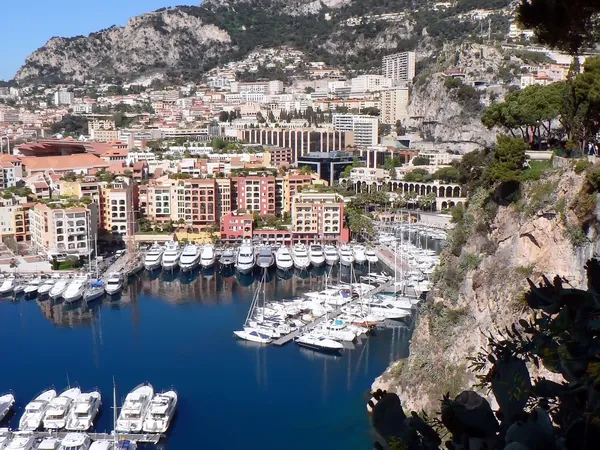
Harnessing Mediterranean Seawater for Urban Climate Decarbonization
FONTVIEILLE, Monaco — The Prince’s Government of Monaco and the Société Monégasque de l’Électricité et du Gaz (SMEG) have implemented comprehensive capacity expansions across the Principality's premier thalassothermal marine energy network, known as SeaWergie. Centered in the reclaimed maritime quarter of Fontvieille, the integrated ocean thermal energy loop utilizes the constant thermodynamic properties of deep Mediterranean seawater to supply high-efficiency, zero-tailpipe-emission district heating, domestic hot water, and chilled water cooling to dense urban districts.
Operating in strict compliance with the environmental charter championed by H.S.H. Prince Albert II, the SeaWergie infrastructure represents a global benchmark in marine geothermal engineering. Seawater is drawn through deep offshore intake shafts positioned along the Monegasque seabed, where temperatures remain thermodynamically stable throughout both winter and summer seasons, and circulated through titanium heat exchangers before being returned to the sea without chemical contamination.
Thermodynamic Innovation and Seawater Heat Pump Efficiency
At the core of the SeaWergie pumping and thermal generation station, next-generation industrial seawater heat pumps achieve exceptional thermodynamic efficiency. Delivering a coefficient of performance (COP) exceeding 3.5, the installation produces 3.5 to 4 times more usable thermal energy than the electrical energy required to operate the circulation pumps. In Fontvieille, this marine loop is strategically coupled with thermal energy recovered from the municipal waste-to-energy plant, establishing a circular trigeneration district energy microgrid.
The expansion supports Monaco’s statutory ban on fossil-fuel heating oil, enabling historic and modern building complexes—ranging from commercial office towers and luxury residential apartments to the Stade Louis II sporting complex—to permanently eliminate individual gas boilers and rooftop chillers. The transition avoids tens of thousands of tonnes of atmospheric carbon dioxide emissions each year.
Pioneering Sovereign Net-Zero Energy Independence by 2050
Monegasque energy authorities and SMEG engineering executives confirmed that real-time digital monitoring sensors continuously supervise marine outflow temperatures and local biodiversity indices around Fontvieille, verifying zero adverse thermal or acoustic disturbance to neighboring coastal ecosystems.
By expanding decentralized thalassothermal loops across Fontvieille, La Condamine, and Larvotto, Monaco is rapidly advancing toward its statutory target of carbon neutrality by 2050. The project demonstrates how compact coastal cities can harness the immense thermal power of the oceans to achieve sustainable urban energy independence and climate resilience.
📰 Related Stories
- Monaco Launches €4.36 Million Architectural Renovation of Fontvieille Shopping Centre as National Council Evaluates District Master Plan Fontvieille • Sep 26, 2026
- Monaco Government Unveils Major Housing and Urban Infrastructure Program for Fontvieille District Fontvieille • Sep 24, 2026
- Prince Albert II of Monaco Foundation Celebrates 20th Anniversary at Opéra de Monte-Carlo, Inking Global Planetary Health Alliance with Gere Foundation Monte Carlo • Sep 28, 2026
- 35th Monaco Yacht Show at Port Hercule Spotlights Maritime Decarbonization, Hydrofoil Technology, and Global Ocean Conservation La Condamine • Sep 28, 2026