South Australia Launches Historic Three-TBM Concurrent Operations on $15.4 Billion T2D Motorway Tunnels
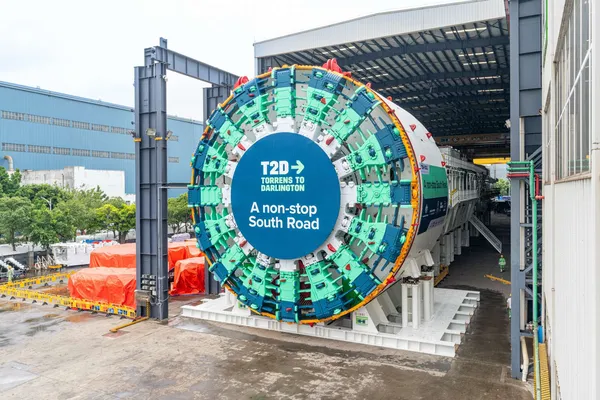
Unprecedented Subterranean Engineering Milestone in South Australia
ADELAIDE, Australia — The South Australian Government, in conjunction with the Department for Infrastructure and Transport (DIT), has reached an unprecedented civil engineering milestone on the landmark $15.4 billion Torrens to Darlington (T2D) Project, initiating simultaneous operations of all three massive Tunnel Boring Machines (TBMs). The concurrent deployment of TBMs Mary, Catherine, and Elizabeth represents the first time in Australian construction history that three giant 3,500-tonne tunneling machines have bored concurrently on a single road infrastructure program.
The T2D Project forms the final and most complex 10.5-kilometer section of the continuous 78-kilometer North-South Corridor, creating a non-stop, traffic-light-free expressway between Gawler in Adelaide's northern fringe and Old Noarlunga in the south. By directing arterial transit beneath suburban surface streets, the project permanently removes heavy freight and commuter congestion from South Road.
Dual Tunnel Drives and Precision Precast Concrete Lining
Subterranean operations are split into two major tunneling sectors. In the south, TBMs Mary and Catherine are carving the 4.5-kilometer twin Southern Tunnels connecting Clovelly Park to Glandore. In the central sector, TBM Elizabeth is executing the 2.2-kilometer Northern Tunnels originating from the Central North Precinct at Hilton. Each machine measures approximately 100 meters in length with an outer diameter exceeding 15 meters, advancing continuously around the clock at rates of 8 to 10 meters daily.
As excavation advances, continuous conveyor systems transport an estimated 7.5 million tonnes of excavated rock and soil to surface treatment facilities for repurposing at reclamation sites in Gillman. Concurrently, a dedicated state-of-the-art precast manufacturing facility at Waterloo Corner is fabricating more than 55,000 precision-engineered reinforced concrete lining segments, ensuring structural tunnel integrity with a design life exceeding 100 years.
Slashing Regional Travel Times and Enhancing Freight Logistics
Upon opening in 2031, the T2D motorway will allow motorists to bypass 21 sets of surface traffic signals, slashing peak-hour commuting journeys by up to 40 minutes round-trip. Crucially, diverting up to 130,000 vehicles daily into smart-monitored underground corridors drastically reduces vehicular idling emissions, lowers urban noise pollution, and enhances street-level pedestrian safety across inner Adelaide suburbs.
South Australian infrastructure authorities emphasized that the project establishes a resilient freight spine connecting key economic gateways—including Adelaide Airport, Port Adelaide, and regional agricultural trade corridors—cementing South Australia's logistics network for decades to come.
📰 Related Stories
- South Australia Sets Milestone on $15.4 Billion T2D Project as Three Tunnel Boring Machines Operate Simultaneously for First Time in Australian History Adelaide • Sep 26, 2026
- Victoria Launches 1,000-Tonne TBM Alice from Burwood as Subterranean Excavation Commences on $34.5 Billion Suburban Rail Loop East Melbourne • Sep 27, 2026
- Sydney Metro Completes 106 Kilometres of Rail Tracklaying on Western Sydney Airport Line Ahead of Dynamic Train Testing Sydney • Sep 27, 2026
- Western Australia Commissions 21km METRONET Morley-Ellenbrook Line and Yanchep Extension in Record Rail Modernization Drive Perth • Sep 26, 2026