U.S.-Iran Conflict Escalates as Strait of Hormuz Tensions Push Oil Prices Higher
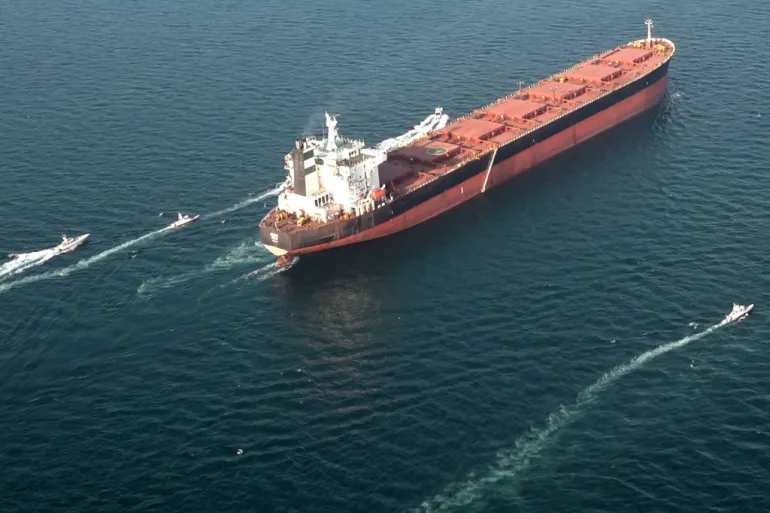
The latest developments in the U.S.-Iran conflict are renewing concerns about the security of the Strait of Hormuz, global energy supplies and the potential for further escalation in the Middle East. Fighting between the United States and Iran has intensified again after a period of relative calm, with military activity around the strategically important waterway becoming a central issue for Washington and international markets.
The Strait of Hormuz has become one of the most important pressure points in the conflict because of its role in international oil transportation. Renewed hostilities have increased uncertainty for commercial shipping, while traders are closely watching whether the latest military escalation will further restrict the movement of tankers through the waterway.
Oil markets reacted sharply to the renewed tensions. Brent crude was approaching $96 a barrel on September 4, putting the benchmark on track for a weekly gain of roughly 9%. U.S. crude was approaching $92 a barrel, reflecting growing concerns that prolonged disruption around the Strait of Hormuz could keep pressure on global energy supplies.
Renewed U.S.-Iran Fighting
The latest escalation follows several days of military exchanges between the United States and Iran. U.S. forces have carried out strikes against Iranian military capabilities, while Iran has responded with attacks involving U.S. and allied positions in the region.
The renewed fighting has also raised concerns among U.S. allies in the Persian Gulf. Recent Iranian missile and drone attacks have targeted locations in countries that host American military forces, adding another layer of risk to an already volatile situation.
U.S. Central Command has previously said American operations targeted Iranian military infrastructure, including air-defense systems, radar equipment and maritime capabilities. Earlier U.S. strikes also targeted Iranian assets connected to the threat against commercial shipping in and around the Strait of Hormuz.
Strait of Hormuz Remains a Major Concern
The Strait of Hormuz is particularly significant because disruptions there can quickly affect energy markets far beyond the Middle East. The waterway connects the Persian Gulf with the Gulf of Oman and is one of the world's most important maritime routes for oil shipments.
The renewed conflict has already reduced normal shipping activity through the area. Although some tankers have continued to move through the waterway, uncertainty over attacks, mines and military operations has made the route considerably more difficult for commercial operators.
Recent reporting indicated that oil flows through the Strait had reached relatively high levels on some days despite the conflict, suggesting that the waterway has not been completely closed to commercial traffic. However, the security situation remains unstable and shipping companies continue to face significant risks.
Why Oil Prices Are Rising
The immediate economic concern for the United States and other countries is the potential effect on fuel prices.
When traders expect oil supplies to be disrupted, crude prices can rise even before an actual shortage develops. The latest escalation has therefore produced a risk premium in oil markets as investors assess whether military activity could interfere with tanker traffic for an extended period.
Higher crude prices can eventually translate into higher gasoline, diesel, transportation and production costs. For American consumers, a prolonged increase could therefore become an economic issue as well as a foreign-policy concern.
The situation is particularly important for the Trump administration because the conflict is unfolding while the United States is heading toward the November midterm elections. Recent reporting has highlighted concerns about the economic and political consequences of elevated fuel prices.
No Clear End to the Conflict Yet
U.S. Vice President JD Vance said Thursday that the administration does not consider the ongoing fighting to be a traditional war and did not provide a timeline for when the confrontation with Iran might end. His comments came as hostilities entered another period of escalation.
The lack of a clear diplomatic breakthrough means markets and governments remain focused on the possibility of additional military action. Any further attacks on shipping, energy infrastructure or U.S. forces could increase pressure on oil prices and raise concerns about a wider regional conflict.
For now, the Strait of Hormuz remains at the center of the U.S.-Iran confrontation. Developments there will likely determine how seriously the latest escalation affects global oil markets, international shipping and the U.S. economy in the days ahead.
📰 Related Stories
- Mayor Bowser Advances Housing Investment Protection Act as WMATA Expedites Major Joint Developments Across D.C. Washington • Oct 14, 2026
- Mayor Bowser Unveils Multi-Ward Housing Package Delivering 1,200 Units as D.C. Weighs Housing Investment Protection Act Washington • Oct 13, 2026
- Mayor Bowser Inaugurates $73M DC Infrastructure Academy at Spingarn as District Advances RFK Transit Master Plan Washington • Oct 06, 2026
- Mayor Bowser Transmits RFK Campus Master Plan to D.C. Council Featuring 6,500 Homes and Riverfront Parkland Washington • Oct 23, 2026