Washington Approves Daraxonrasib for Metastatic Pancreatic Cancer
New targeted treatment offers longer survival for patients whose cancer progressed after earlier therapy
WASHINGTON, District of Columbia — The Food and Drug Administration on Wednesday approved daraxonrasib, a first-of-its-kind daily pill for the most common form of pancreatic cancer, giving patients with metastatic disease a new targeted treatment after standard therapies stop working.
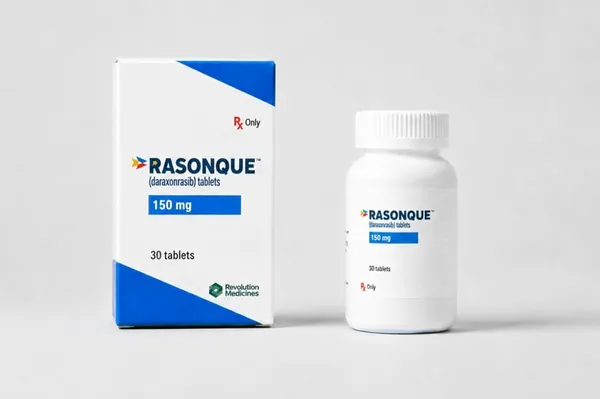
The drug, which will be marketed by Revolution Medicines under the brand name Rasonque, is designed to block cancer-driving mutations in the RAS gene family. FDA officials granted expedited approval more than six months ahead of the agency's target decision date, according to an FDA statement.
Daraxonrasib addresses a major challenge in pancreatic cancer treatment: KRAS mutations that fuel tumor growth in more than 90% of cases. Although scientists have known for decades that these mutations are central to many pancreatic tumors, the shape of the altered proteins made them difficult for medicines to bind to. That obstacle led researchers to describe the cancer driver as "undruggable" for years.
Revolution Medicines' treatment uses a molecular-glue approach intended to bind with multiple KRAS subtypes. The approval applies to patients with metastatic pancreatic cancer whose disease has continued to progress despite previous treatment.
Trial found median survival of 13.2 months
The FDA's decision was based on a company-funded study involving 500 patients with metastatic pancreatic cancer. Participants were randomly assigned to receive daraxonrasib or additional chemotherapy after their cancer no longer responded to earlier treatment.
Patients who received the experimental drug had a median survival time of 13.2 months, compared with 6.7 months for those treated with chemotherapy. The study also found that people taking daraxonrasib experienced fewer serious side effects than patients receiving chemotherapy.
"It is our fundamental duty to deliver more cures and meaningful treatments to patients as quickly as possible," acting FDA Commissioner Kyle Diamantas said in announcing the decision.
The treatment had already attracted public attention before its formal authorization. Former Nebraska Republican Sen. Ben Sasse discussed his experience with the drug, including reduced pain, during an appearance earlier this year on CBS' 60 Minutes. Increased interest from patients subsequently prompted the FDA to permit expanded access for people who met specified eligibility criteria before the approval was completed.
A difficult cancer to diagnose and treat
Pancreatic cancer remains one of the deadliest cancers in the United States, largely because it is often not detected until it has spread beyond the pancreas. The American Cancer Society estimates that about 67,000 people in the United States will be diagnosed with the disease this year, while more than 52,000 are expected to die from it. Its overall five-year survival rate is 13%.
Unlike several other cancer types, where patients may have multiple targeted drugs and chemotherapy alternatives, pancreatic cancer has had comparatively few effective treatment options. Cancer specialists said the daraxonrasib approval could mark an important step toward a broader wave of medicines aimed at KRAS and related molecular targets.
Redwood City, California-based Revolution Medicines is also studying its drug technology in other cancers, including lung cancer. Daraxonrasib is now FDA-approved for eligible U.S. patients with metastatic pancreatic cancer, while research into additional uses of the treatment remains ongoing.
📰 Related Stories
- Mayor Bowser Unveils Multi-Ward Housing Package Delivering 1,200 Units as D.C. Weighs Housing Investment Protection Act Washington • Oct 13, 2026
- Mayor Bowser Inaugurates $73M DC Infrastructure Academy at Spingarn as District Advances RFK Transit Master Plan Washington • Oct 06, 2026
- Mayor Bowser Transmits 180-Acre RFK Master Plan to D.C. Council as WMATA Plans Stadium-Armory Overhaul Washington • Oct 05, 2026
- Mayor Bowser Advances Housing Investment Protection Act as D.C. Council Debates 6,500 Homes at RFK Campus Washington • Oct 05, 2026