Lindsay Clancy Murder Trial Goes to Jury After 22 Days in Duxbury Children’s Deaths Case
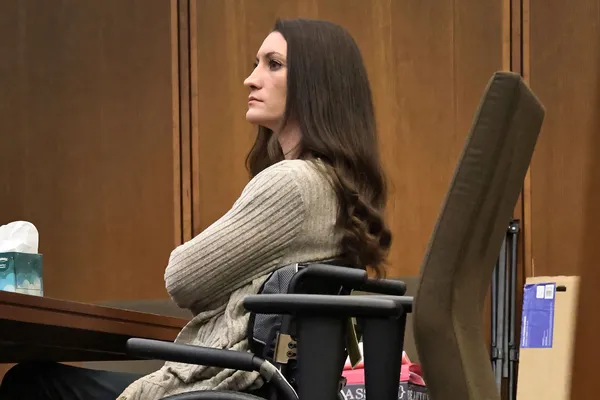
Jurors must decide whether Clancy could distinguish right from wrong
A Massachusetts jury began deliberations after closing arguments Thursday, Aug. 27, in the Lindsay Clancy murder trial, which centers on the deaths of her three children at the family’s home in Duxbury, Massachusetts, in January 2023. Clancy, 36, has pleaded not guilty to first-degree murder in the deaths of Cora, 5, Dawson, 3, and Callan, 8 months.
There is no dispute that Clancy killed the children on Jan. 24, 2023, according to the evidence presented in Plymouth Superior Court. The central question for jurors is whether her mental illness rendered her criminally irresponsible under Massachusetts law — specifically, whether she was able to understand the difference between right and wrong when the children were killed.
Clancy later cut her throat and jumped from a window at the home, breaking her neck and leaving her paralyzed. Prosecutors contend the suicide attempt was staged and that her actions showed planning. Defense lawyers argue she was severely unwell, overmedicated and experiencing postpartum psychosis.
Husband and first responders described a devastating scene
Patrick Clancy, who was married to Lindsay Clancy at the time and has since divorced her, testified over two days. He said his wife had struggled with anxiety and lack of sleep but appeared to be having “one of her best days” before the killings.
He told jurors that he left the home to collect takeout food and then stopped at CVS after Lindsay Clancy sent him a message asking him to pick up medicine. When he returned, he said the home was unusually quiet and the bedroom door was locked. Inside, he saw blood and an open window, then found Lindsay Clancy outside with injuries to her wrists and neck.
Patrick Clancy testified that she said she had tried to die by suicide. When he asked about their children, she told him they were in the basement but did not say they had been harmed, he said. He later found the children and attempted CPR before first responders arrived.
Duxbury police and fire personnel described the response as chaotic. Officer Stephen Hall said Patrick Clancy called for help from the backyard, while Officer Brian Josephine recalled Patrick Clancy screaming that his wife had killed the children after officers entered the home. Fire Capt. and paramedic PJ Hussey said an all-personnel call was issued as resources converged on the scene.
Experts offered sharply different views of Clancy’s mental state
Much of the 22-day trial focused on Clancy’s psychiatric treatment, medications and mental state in the months before the killings. Diary entries and notes recovered from her phone described insomnia, anxiety, depression, brain fog and difficulty connecting with her youngest child. In one entry, she wrote that she wanted help and wanted to be well.
Her treating psychiatrist, Dr. Jennifer Tufts, testified that Clancy denied suicidal and homicidal thoughts during an appointment the day before the deaths. Tufts said she saw no signs of psychosis or mania and did not believe hospitalization was necessary at that point.
Other witnesses, including family members and a psychiatric nurse practitioner, described concerns about Clancy’s worsening symptoms and the effects of medication. Her mother, Paula Musgrove, testified that Clancy asked for help and expressed worries about her prescriptions. Patrick Clancy had also voiced concern to a treatment provider that his wife’s symptoms began after she started medication, the provider said.
Forensic experts disagreed over the significance of Clancy’s later accounts that she heard a male voice ordering her to kill her children and herself. Defense expert Dr. Phillip Resnick testified that Clancy was psychotic and experiencing a command hallucination. Prosecution rebuttal expert Dr. Avram Mack said she suffered from depression and anxiety but retained the capacity required for criminal responsibility.
In closing arguments, defense attorney Kevin Reddington said Clancy had repeatedly sought help and was failed by medical providers. Prosecutor Jennifer Sprague said the evidence showed planning, pointing to testimony that Clancy checked how long Patrick Clancy’s errands would take before the deaths.
The judge denied a defense request for a mistrial earlier this week after testimony referenced Catholic beliefs, instructing jurors to disregard the remarks. The case is now with the jury following final instructions from the court, part of the Massachusetts court system. No verdict had been announced as of Aug. 28.
📰 Related Stories
- Duxbury Home Visit Provides Jurors Insight in Lindsay Clancy Murder Trial Duxbury • Jul 31, 2026
- Lindsay Clancy's Murder Trial Reveals Disturbing 911 Call and Mental Health Struggles Duxbury • Jul 30, 2026
- Boston Files Federal Lawsuit to Recover $20M Infrastructure Grant as Mayor Wu Delivers State of the Schools Address Boston • Oct 19, 2026
- Mayor Michelle Wu and City Council Establish City Planning Department as Updated Inclusionary Zoning Drives Transit-Adjacent Housing Boston • Oct 17, 2026