Hawk Fire Destroys Homes in Reno as 90,000 Face Evacuation Alerts
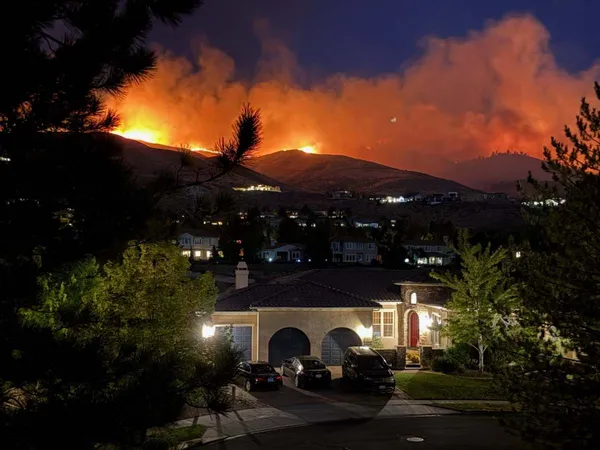
Wind-driven wildfire forces mass evacuations across northwest Reno
RENO, Nevada — The fast-moving Hawk Fire destroyed homes in northwest Reno on Sunday, Aug. 23, after shifting winds drove flames through dry brush and forced evacuation orders or warnings affecting about 90,000 people, authorities said. The wildfire, which began Saturday in the Peavine Peak area north of the city, had grown to more than 23 square miles by Sunday and remained at zero containment.
Washoe County Sheriff Darin Balaam said the fire spread with exceptional speed Saturday night, at times jumping over fire trucks and preventing crews from reaching hot spots. Firefighters faced changing wind directions as residents attempted to leave threatened neighborhoods in the foothills near the California border.
“Please get out if you can right now,” Balaam urged during the emergency response. Officials expanded the county’s “GO NOW” evacuation zone to include roughly 42,000 residents, reaching the edge of the University of Nevada, Reno. Another 45,000 people were under an adjacent evacuation warning and were told to prepare to leave for several days if conditions worsened.
At least six injured as crews battle extreme fire behavior
At least six people were injured, including three first responders and three civilians, officials said. Authorities described the Hawk Fire as human-caused, though they had not disclosed whether investigators believe it was accidental or intentional, or detailed the evidence behind that determination.
A Sunday evening fire update reported “extreme fire behavior” as gusts pushed flames through dense, dry vegetation. Fire managers warned that the blaze could continue making moderate- to high-intensity runs over the following 12 hours, particularly in areas with heavy fuels. Firefighters were working to extinguish hot spots and stop the fire from crossing a major highway into neighborhoods and commercial areas.
Nevada Gov. Joe Lombardo declared an emergency in Washoe County and activated the Nevada National Guard. Two helicopter crews were assigned to aerial firefighting operations, while 60 Guard troops were deployed to help law enforcement protect evacuated areas. About 800 fire personnel were also responding, according to officials.
The fire’s impact extended beyond residential areas. Two hospitals evacuated patients, portions of U.S. Route 395 were closed, and the Reno-Stead Airport shut down commercial service while remaining available for firefighting and military aircraft. Nearly 10,000 power customers in Washoe County were without electricity Sunday, down from about 60,000 outages reported Saturday.
Homes damaged as Reno faces another dangerous fire week
Authorities had not released a confirmed count of homes damaged or destroyed by late Sunday. Residents posted videos showing burned vehicles and structures reduced to rubble, including one property where a scorched basketball hoop was left standing. Families who escaped described having only minutes to collect pets, clothing and essential belongings before flames descended toward their neighborhoods.
Emergency officials opened the Reno-Sparks Convention Center for evacuees, while separate facilities were arranged for small and large animals. Local casinos also offered discounted rooms to people displaced by the fire. Schools closed as evacuation activity continued and officials sought to keep roads open for emergency vehicles.
The Hawk Fire is the third major wildfire reported in rugged terrain north of Reno within two weeks, and fire officials said all three were linked to human activity. The blaze comes during an exceptionally dry summer across the American West, where low snowfall and months of dry weather have increased wildfire danger.
Late Sunday, officials said the fire had largely remained within its existing footprint, but warned that strengthening winds could rapidly change conditions. Evacuation orders remained in effect, the cause investigation was continuing, and firefighters were expected to work overnight to contain hot spots and protect homes.
📰 Related Stories
- Hawk Fire Near Reno Burns 15,067 Acres as 9,000 Residents Return Home Reno • Aug 26, 2026
- Hawk Fire in Reno, Nevada, Destroys Dozens of Homes and Forces 45,000 Evacuations Reno • Aug 25, 2026
- Hawk Fire Near Reno Prompts Evacuation Warning for 90,000 Residents Reno • Aug 24, 2026
- RTC Southern Nevada Operates 12.5-Mile Red Line BRT as Las Vegas Medical District Adds Healthcare Housing Las Vegas • Oct 05, 2026