Dallas Surrogacy Custody Fight Continues as Newborn Rumi Remains Critical
Custody dispute raises wider questions about parental rights and commercial surrogacy in Texas
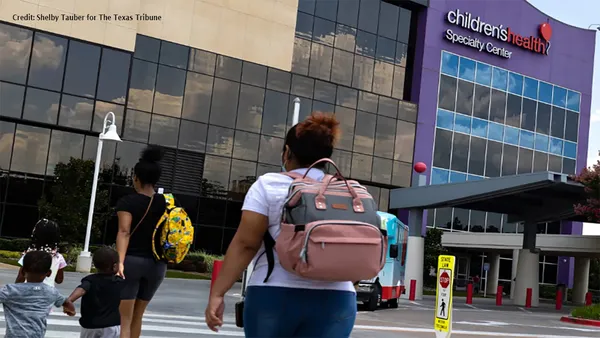
DALLAS — An Alaska surrogate is continuing her effort to obtain custody of a newborn she carried after giving birth in Dallas, despite the child receiving emergency heart surgery under the care of his biological parents. The infant, known as Rumi to his parents and Gabriel to surrogate McKenna West, remained in critical condition at a Dallas-area hospital as of Monday, according to Lee Budner, attorney for the intended parents.
West had asked a Dallas County court to intervene before the birth, alleging that the baby’s biological parents, Omar Ahmed and Nausheen Gilkar of California, planned to withhold needed medical treatment and were pressuring her to end the pregnancy. Ahmed and Gilkar deny the allegations involving both medical care and abortion, and their attorney said they promptly approved surgery after Rumi was born with an underdeveloped heart requiring multiple operations during his early years.
“Ms. West continues to assert baseless claims for custody of Rumi,” Budner said, arguing that her request conflicts with court orders issued in Alaska and California. He said the parents are focused on the baby’s health and safety.
West’s attorney did not comment on the case. But Lila Rose, founder of the anti-abortion organization Live Action, said West still seeks custody because she does not believe the intended parents can be trusted to act in the child’s best interest. Live Action helped West travel from Alaska to Texas, where she was connected with the conservative Christian legal group Alliance Defending Freedom.
Dallas judge has recognized intended parents’ rights
The dispute involves a gestational surrogacy agreement signed in Alaska before the medical process began. Such agreements generally set out compensation, medical responsibilities and the intended parents’ authority to make decisions during the pregnancy. Legal specialists say they are designed to prevent precisely the type of conflict now playing out in Dallas.
West previously challenged the agreement in Alaska and California. An Alaska court deferred to California because the birth had been planned there, and a California court ruled in favor of Ahmed and Gilkar. Last week, a Dallas County family district judge denied West’s request for a temporary restraining order, recognized Ahmed and Gilkar as the parents and granted them custody after the birth.
However, West argues that Texas law could still recognize her as the legal mother because she delivered the child in the state. Under default parentage rules, the person who gives birth is generally presumed to be a child’s legal parent when a court does not enforce a valid surrogacy arrangement.
Attorney Christine Andresen of Austin-based CHA Law Group said an outcome favoring West could unsettle intended parents who rely on surrogacy agreements to establish their rights to a biologically related child. Reproductive-law experts say the case is unusual but could become a significant test of how Texas courts treat surrogacy agreements when a birth occurs outside the state originally anticipated by the parties.
Abortion clause is central to legal challenge
A major issue in the Dallas surrogacy custody fight is an abortion provision that Ahmed and Gilkar’s attorney says was included in the agreement. Such clauses can address pregnancies involving serious fetal conditions or threats to a surrogate’s health. They do not permit intended parents to physically compel an abortion, legal experts say, but can create contractual and financial consequences if either side does not follow agreed terms.
West has argued in Dallas court filings that enforcing a financial penalty over her refusal to terminate the pregnancy would violate her rights to privacy and bodily autonomy. Alliance Defending Freedom has publicly backed that position. Texas Attorney General Ken Paxton’s office has also intervened on West’s behalf.
The case has drawn attention from conservative organizations that oppose abortion and seek limits on commercial surrogacy. Texas Right to Life and Live Action have called for abortion-related provisions to be removed from surrogacy contracts, while some advocates support a broader ban on commercial arrangements.
The litigation arrives as Texas lawmakers consider new restrictions on commercial surrogacy and in-vitro fertilization. The Texas Department of State Health Services recorded 657 births through surrogacy in 2025, underscoring the potential effect of any legal or legislative changes on families using the practice.
West’s lawyers have indicated they may continue appeals beyond Texas if necessary. The next hearing in the Dallas County case is scheduled for Aug. 25, while Rumi remains hospitalized and his medical condition remains critical.
📰 Related Stories
- Mayor Eric Johnson Champions $443M Public Safety Bond as Dallas Deploys Municipal AI Efficiency Tools Dallas • Oct 23, 2026
- Dallas City Council Debates $443M Proposition A Safety Bond as Mayor Eric Johnson Champions Innovation and Efficiency Dallas • Oct 19, 2026
- Dallas Area Rapid Transit Advances Intensive Fleet Testing on 26-Mile Silver Line Commuter Rail Corridor to DFW Airport Dallas • Oct 19, 2026
- Dallas City Council Delays Vote on $800M Preston Hollow Development as Mayor Eric Johnson Defends $443M Proposition A Bond Dallas • Oct 18, 2026