Seattle City Council Passes Transit Corridor Zoning Overhaul and Allocates $115M for Social Housing Near Light Rail
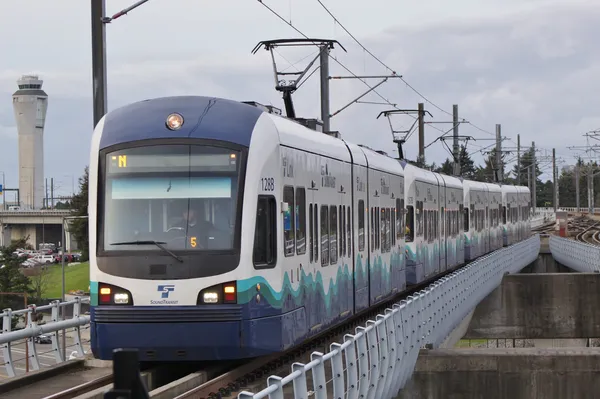
Seattle Enacts Major 'Centers and Corridors' Middle Housing Expansion Near Mass Transit
SEATTLE, Washington — In a monumental legislative action aimed at tackling the Pacific Northwest's housing deficit while capitalizing on historic mass transit investments, the Seattle City Council has formally enacted its comprehensive 'Centers and Corridors' middle housing zoning overhaul. The landmark legislation directly dismantles restrictive single-family mandates along designated urban arterials, legally authorizing duplexes, triplexes, fourplexes, and stacked townhouses within immediate walking walksheds of high-capacity transit corridors.
The sweeping land-use reform coincides with rapid expansion milestones across the Sound Transit Link light rail network. Following the successful passenger opening of the northern Lynnwood Link extension, regional civil engineers have commenced pre-revenue operational testing for the cross-Lake Washington segment of the 2 Line (East Link), directly linking downtown Seattle's employment core with Bellevue and Redmond. By legally synchronizing higher residential density with new rail nodes—including the upcoming NE 130th Street infill station—the city ensures tens of thousands of future residents enjoy convenient transit commutes without automobile reliance.
$115 Million Interlocal Agreement Funds First Pipeline of Mixed-Income Social Housing
Addressing housing affordability alongside private-market density, the Seattle City Council has approved an historic interlocal financial agreement transferring $115 million to the newly established Seattle Social Housing Developer (SSHD):
- Voter-Mandated Funding Stream: Backed by the voter-approved Proposition 1A high-earner payroll tax, the dedicated capital reserve provides sustainable financing to build, acquire, and manage public mixed-income housing.
- Anti-Displacement Focus: Prioritizing land acquisition and multi-family development in historically vulnerable communities across the Rainier Valley and the Central District to shield long-standing working families from gentrification.
- Cross-Subsidized Rental Model: Utilizing progressive rent tiers where market-rate tenants cross-subsidize deeply affordable apartments for service workers, artists, and families earning below the Area Median Income (AMI).
- City-Owned Land Transfers: Expediting surplus municipal parcel transfers directly to the SSHD to lower upfront development expenditures and accelerate construction schedules.
Equitable Transit-Oriented Development and Carbon-Free Regional Connectivity
Underpinning Seattle’s urban blueprint is an aggressive commitment to Equitable Transit-Oriented Development (ETOD), supported by competitive federal capital grants from the Federal Transit Administration (FTA). The Seattle Department of Transportation (SDOT) has synchronized zoning changes with dedicated bus rapid transit corridors and protected bike superhighways, linking outer neighborhoods directly into light rail interchanges.
By pairing forward-looking middle housing deregulation with a well-funded public social housing entity and world-class rail expansion, Seattle establishes an enduring national model for sustainable, transit-anchored urban growth that protects community equity while expanding regional housing supply.
📰 Related Stories
- Mayor Bruce Harrell and City Council Preserve $343M Affordable Housing Fund and Expand CARE Teams Seattle • Oct 23, 2026
- Sound Transit Opens Landmark $3.1 Billion Lynnwood Link Light Rail Extension Connecting King and Snohomish Counties Seattle • Oct 19, 2026
- Sound Transit Opens Landmark $3.1 Billion Lynnwood Link Light Rail Extension Connecting Snohomish County to Seattle Seattle • Oct 18, 2026
- Seattle Breaks Ground on 400-Unit Mount Baker Transit Housing Campus as Voters Prepare to Weigh Seattle Transit Measure Seattle • Oct 18, 2026