City of Phoenix and Valley Metro Complete 5.5-Mile South Central Light Rail Extension Linking Downtown to Baseline Road
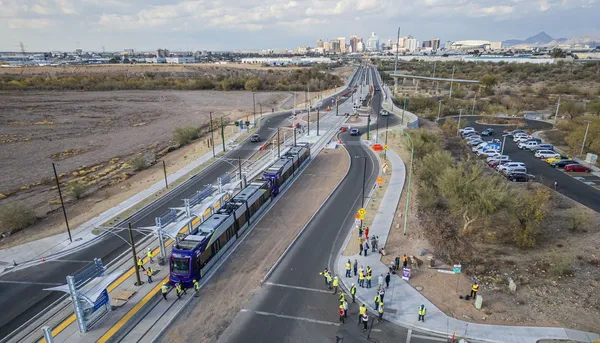
Transformative South Central Corridor Connects South Phoenix to Regional Transit Grid
PHOENIX, Arizona — In a transformative civil engineering and transportation equity achievement for the Valley of the Sun, the City of Phoenix and Valley Metro have celebrated the complete construction and operational opening of the landmark 5.5-mile South Central Extension / Downtown Hub (SCE/DH) light rail project. Extending southward from downtown Phoenix along Central and 1st avenues down to Baseline Road, the multi-million-dollar rapid transit line establishes a vital, high-capacity connection for historically underserved neighborhoods across South Phoenix.
Financed through a strategic combination of Phoenix’s voter-approved Transportation 2050 (T2050) sales tax initiative, regional transportation funds, and a major $530 million Capital Investment Grant (New Starts) from the Federal Transit Administration (FTA), the project was accelerated by nearly a decade ahead of its original regional schedule. The new corridor slashes commute times between South Phoenix and central employment centers, offering rapid, affordable transit to regional healthcare networks, universities, and commercial districts.
Historic Transition to a Two-Line Light Rail Transit Network
The launch of the South Central Extension marks a defining milestone in Valley Metro’s history, officially transitioning the light rail system from a single trunk line into a flexible, high-frequency two-line rail network:
- A Line: Operates east-west between Gilbert Road/Main Street in Mesa and the Downtown Phoenix Hub.
- B Line: Provides continuous north-south mobility connecting Metro Parkway in northwest Phoenix directly to Baseline Road in South Phoenix via the Downtown Hub.
Along the 5.5-mile corridor, the project delivers eight brand-new passenger stations designed to meet full Americans with Disabilities Act (ADA) accessibility guidelines. Engineered for extreme Sonoran Desert climates, the stations feature custom architectural shading canopies, overhead misting systems, high-volume thermal cooling fans, solar-reflective platform finishes, real-time digital passenger arrival screens, and original public artworks created by local South Phoenix artists celebrating the corridor's rich cultural heritage.
Complete Street Urban Transformation Along Central Avenue
Beyond laying heavy steel rails and high-voltage catenary systems, the civil project delivered a complete urban streetscape overhaul of Central Avenue. Infrastructure joint ventures rebuilt kilometers of roadway with whisper-quiet asphalt paving, widened continuous concrete pedestrian sidewalks, added dedicated bicycle lanes, planted hundreds of drought-tolerant shade trees, and installed energy-efficient architectural LED street lighting.
The project introduced new protected left-turn bays, upgraded subterranean stormwater drainage trunks, replaced century-old municipal water lines, and installed pedestrian-activated hybrid beacons (HAWK signals) at high-pedestrian intersections, delivering profound pedestrian safety enhancements aligned with the City of Phoenix Vision Zero action plan.
Small Business Assistance and Sustainable Regional Decarbonization
Throughout the multi-year construction lifecycle, Valley Metro and the City of Phoenix administered an aggressive Small Business Assistance Program (SBAP). Deploying over $10 million in direct financial relief grants, bilingual technical consulting, and hyper-local marketing campaigns, the program successfully insulated hundreds of mom-and-pop restaurants, auto shops, and community retailers along Central Avenue during utility excavation works.
Operating entirely on zero-emission electrified power, the expanded light rail network will remove an estimated 12,000 daily passenger vehicle trips from congested arterial corridors including Interstate 17 and 7th Street. Civic and business leaders underscored that the South Central Extension will serve as a resilient catalyst for transit-oriented mixed-income housing, local job growth, and long-term air quality improvement across Greater Phoenix for generations to come.
📰 Related Stories
- Phoenix City Council Approves Records Fee Modernization to Clear 40,000-Case Backlog as Mayor Gallego Hosts International Gala Phoenix • Oct 18, 2026
- Phoenix City Council Evaluates $575M Bond Framework and Water Priorities Ahead of PHXLink Microtransit Launch Phoenix • Oct 18, 2026
- Phoenix Prepares $2 'PHXLink' Microtransit Ahead of October 26 Launch as State AG Convenes Ahwatukee Data Center Forum Phoenix • Oct 17, 2026
- Massive Haboob and Cyclone Rachel Moisture Sweep Valley as Phoenix Celebrates 10 Years of Transportation 2050 Phoenix • Oct 13, 2026