Metropolitano de Lisboa Accelerates €330 Million Circular Line with Structural Progress at Estrela and Santos Stations
Forging an Orbital Transit Backbone for the Portuguese Capital
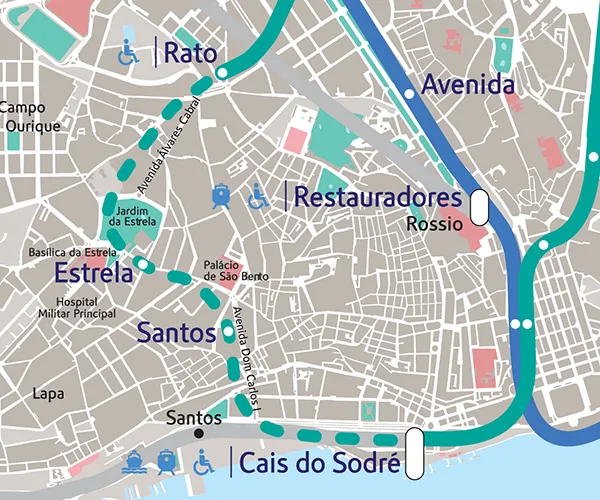
LISBON, Lisbon District — In the most transformative expansion of Portugal's capital transit network in over two decades, Metropolitano de Lisboa (Metro de Lisboa) and the Ministry of Infrastructure and Housing are advancing decisive civil and electromechanical milestones across the landmark €330 million Circular Line (Linha Circular) project. Spanning a new 2-kilometre underground link connecting the current Green Line terminus at Cais do Sodré with the Yellow Line terminus at Rato, the megaproject fuses the two lines into a continuous 16-station orbital rail ring that will reshape urban mobility across central Lisbon.
Financed through the European Union's Recovery and Resilience Facility alongside national capital budgets, the Circular Line establishes an integrated mass transit ring connecting major suburban rail terminals, Tagus ferry terminals, universities, and commercial districts, providing rapid, transfer-free journeys across the urban core.
Engineering 54-Metre Deep Caverns at Estrela and Waterfront Tunnels at Santos
Delivering the subterranean connection beneath Lisbon's historic, hilly topography represents a masterclass in heavy civil engineering. At Estrela Station, situated directly opposite the iconic Basílica da Estrela, contractors have excavated one of the deepest underground stations in Europe, plunging 54 metres below surface street level. To provide swift, accessible transit, the station features a monumental elevator shaft housing six high-speed, high-capacity passenger elevators alongside panoramic escalators linking the cavernous platforms to the surface ticket concourse.
At Santos Station, situated near the Tagus River waterfront, engineering teams utilized specialized jet-grouting, slurry diaphragm walls, and subterranean dewatering systems to safely bore through complex alluvial soils and historic masonry foundations without disturbing neighboring residential buildings or the 28E historic tram network above. Heavy tunneling is complete, and teams have transitioned to installing track slabs, 750V DC rigid catenary lines, and architectural finishes.
Communications-Based Train Control and Next-Generation Stadler Rail Fleet
To operate high-frequency circular services, Metro de Lisboa is deploying cutting-edge Communications-Based Train Control (CBTC) digital signalling infrastructure across the entire loop. This automated train protection and control system enables ultra-tight train headways of under 3 minutes during peak hours, significantly increasing passenger throughput and reducing wait times.
The new alignment will be operated by a bespoke fleet of 14 modern three-car trainsets manufactured by Stadler Rail. Equipped with regenerative braking that feeds power back into the third-rail grid, spacious walk-through carriages, dynamic LED route maps, and dedicated wheelchair and bicycle zones, the new fleet delivers an accessible, world-class rider experience.
Slashing Traffic Bottlenecks and Advancing Lisbon's Climate Neutrality Mandate
Municipal planners and environmental authorities highlighted that the Circular Line is projected to attract tens of millions of passenger trips annually, removing an estimated 25,000 daily car journeys from congested arterial thoroughfares like Avenida da Liberdade, Marquês de Pombal, and the riverside 24 de Julho corridor.
Expected to eliminate over 5,000 metric tons of carbon dioxide emissions each year, the Circular Line establishes an integrated, decarbonized mass transit spine that connects Lisbon's business districts, universities, healthcare centers, and regional ferry terminals for generations to come.