San Francisco Advances Landmark Muni Fleet Modernization and Multi-Corridor Infrastructure Upgrades
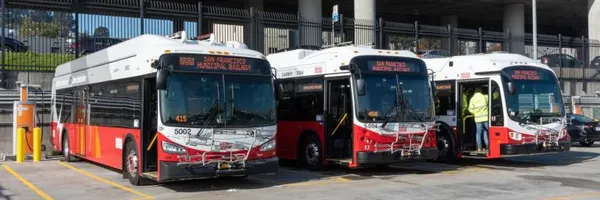
Transforming San Francisco's Historic Transit Facilities for a Zero-Emission Future
SAN FRANCISCO, California — The San Francisco Municipal Transportation Agency (SFMTA) and city infrastructure partners have reached pivotal engineering and planning milestones across the multi-million-dollar Building Progress Program, advancing the deep modernization of century-old transit yards to support the city's transition toward a 100 percent zero-emission battery-electric bus fleet by 2040. At the heart of this generational investment is the transformation of the historic Potrero Yard and Presidio Division facilities, reimagining traditional bus maintenance depots into state-of-the-art multimodal infrastructure integrated with affordable housing and community amenities.
The Potrero Yard Modernization Project serves as the nation's premier joint development initiative pairing heavy transit operations with dense urban residential housing. Under the approved master plan, the obsolete brick bus barn is being reconstructed into a modern, three-story, seismically resilient maintenance and charging hub capable of servicing approximately 213 electric trolley and battery-electric buses. Crucially, the structure is crowned by up to 575 permanently affordable residential apartments built directly above the active transit yard, setting an innovative national standard for equitable transit-oriented development.
Multi-Agency Caltrans and SF Public Works Infrastructure Upgrades on 19th Avenue
Complementing depot upgrades, major civil infrastructure rehabilitation is actively moving forward along San Francisco's crucial arterial corridors. The California Department of Transportation (Caltrans), in coordinated partnership with San Francisco Public Works and the San Francisco Public Utilities Commission (SFPUC), has mobilized specialized engineering crews for the comprehensive rehabilitation of 19th Avenue (State Route 1) between Sloat Boulevard and Lincoln Way.
The multi-phase undertaking encompasses heavy-duty roadway resurfacing, reinforced pedestrian safety crosswalks, ADA-compliant curb ramps, and modern synchronized traffic signals designed to streamline transit flow while protecting pedestrians along one of the city's most heavily traversed commuter routes. Concurrently, contractors are executing the 14-month partial closure and structural upgrade phase of the historic Broadway Tunnel, integrating upgraded signalization and traffic calming features near Helen Wills Playground tied directly to the broader revitalization of the Chinatown Public Health Center.
Beale Street and Subterranean Sewer Overhauls Elevate Urban Resilience
Simultaneously, the city is advancing vital subterranean and streetscape overhauls on Beale Street between Market Street and Folsom Street, managed by San Francisco Public Works in coordination with local utility providers. The project replaces degraded underground water and power conduits while delivering widened sidewalks, modern transit boarding islands, and protected bicycle lanes connecting the Transbay transit district with the Embarcadero waterfront.
Beneath surface pavements, the San Francisco Public Utilities Commission (SFPUC) is executing extensive large sewer pipeline improvements across West SoMa, the Panhandle, and the Inner Sunset. Utilizing trench-reducing cured-in-place pipe (CIPP) engineering, municipal crews are systematically lining and rehabilitating century-old brick and concrete sewer mains without requiring destructive street excavation. This trenchless technology dramatically minimizes arterial traffic disruption while bolstering the city's flood defense and stormwater resilience against extreme atmospheric river weather events.
Digital Network Infrastructure and Long-Range SFTP 2050+ Strategic Vision
Beyond physical pavement and tracks, SFMTA has deployed advanced digital transit technologies, including next-generation real-time passenger information displays, automated camera enforcement along transit-only red lanes, and expanded contactless fare integrations across the Muni Metro network. These upgrades are reinforced by innovative multimodal mobility partnerships, such as regional transit reward integrations coordinated with autonomous vehicle services to encourage first- and last-mile connections to public mass transit.
These coordinated infrastructure efforts align with the updated San Francisco Transportation Plan (SFTP 2050+) led by the San Francisco County Transportation Authority (SFCTA). The long-range investment blueprint channels federal One Bay Area Grant (OBAG) funding toward neighborhood street safety, active mobility, and rapid bus corridors, ensuring San Francisco builds an equitable, decarbonized, and dependable transit network for future generations.
📰 Related Stories
- San Francisco Enacts 45-Day Data Center Moratorium Amid Power Grid Strains and Surging Housing Pressures San Francisco • Oct 13, 2026
- San Francisco Board of Supervisors Enacts 45-Day Data Center Moratorium Over Power Grid and Environmental Justice Concerns San Francisco • Oct 13, 2026
- San Francisco Fleet Week 2026 Launches Along Embarcadero as Federal and Local Sweep Nets 84 Arrests San Francisco • Oct 05, 2026
- Sound Transit Opens $3.1 Billion Lynnwood Link Light Rail Extension Connecting King and Snohomish Counties Seattle • Oct 13, 2026