Seattle Completes Major 12th & Pike Overhaul on Capitol Hill as City Sets 2027 Minimum Wage at $22.14
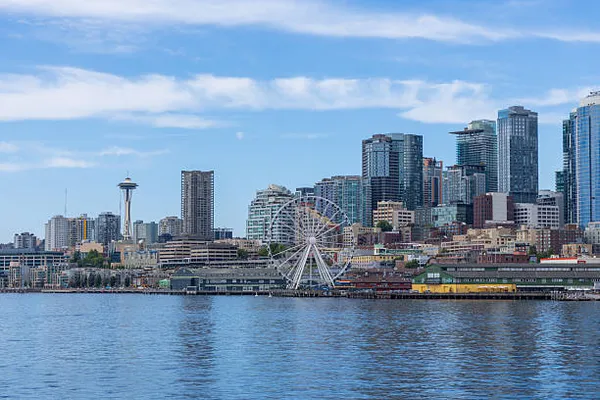
Seattle Public Utilities and SDOT Complete Landmark Sewer and Street Overhaul at 12th and Pike
SEATTLE, Washington — Concluding months of intensive subterranean civil engineering, Seattle Public Utilities (SPU) and the Seattle Department of Transportation (SDOT) announced the full completion and roadway reopening of the major infrastructure modernization at 12th Avenue and East Pike Street on Capitol Hill in October 2026. The comprehensive multi-agency undertaking replaced century-old brick sewer mains with reinforced, seismic-resistant utility piping engineered to serve the dense commercial and residential hub for the next century.
Alongside pipe replacements, crews repaved the intersection, installed ADA-compliant curb ramps, upgraded pedestrian countdown signals, and integrated high-visibility crosswalk markings. Capitol Hill small business owners and merchant associations celebrated the intersection's reopening, which restores smooth pedestrian foot traffic and transit flows along Pike Street ahead of the bustling autumn retail season.
Office of Labor Standards Announces Seattle Minimum Wage Rising to $22.14 in 2027
In regional economic policy, the Seattle Office of Labor Standards (OLS) officially announced that the city’s hourly minimum wage for large employers will increase to $22.14 per hour, effective January 1, 2027. Calculated under the city's mandatory Consumer Price Index inflation adjustment formulas, the rate adjustment ensures wages keep pace with metropolitan cost-of-living increases.
Labor leaders and worker advocacy groups applauded the statutory benchmark, noting that predictable wage growth supports tens of thousands of service workers across food, retail, and hospitality sectors. Business coalitions also noted clear timeline horizons for budgeting upcoming operational expenses.
Washington State Ferries Deploys Puget Sound Triangle Route Contingency Plans
Concurrently, Washington State Ferries (WSF) implemented dynamic scheduling contingency plans to stabilize vessel sailings along the Fauntleroy-Vashon-Southworth route across Puget Sound, mobilizing relief maritime crews while dispatching Sound Transit express coaches to maintain dependable commuter connections.
City councilmembers emphasized that completing critical subterranean utility repairs while maintaining robust labor standards ensures Seattle remains a resilient, equitable metropolitan engine.
📰 Related Stories
- Seattle Police Chief Shon Barnes Resigns as Mayor Wilson Launches Public Safety Transition Plan Seattle • Oct 05, 2026
- Sound Transit Advances Historic 2 Line Light Rail Across Lake Washington Floating Bridge Linking Seattle and Bellevue Seattle • Oct 05, 2026
- Seattle City Council Reviews Mayor Wilson’s $9.1B Biennial Budget as Sound Transit Evaluates Rail Phasing Seattle • Oct 05, 2026
- Detroit Advances $2.24B Renaissance Center Redevelopment Talks as City Scales Affordable Housing PILOT Detroit • Oct 05, 2026