Victoria Advances Final Systems Testing and Architectural Fit-Outs on $15.3 Billion Melbourne Metro Tunnel Project
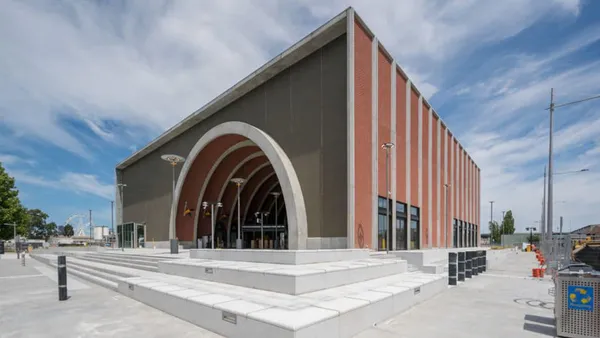
Transforming Melbourne’s Railway Spine to Untangle the City Loop
MELBOURNE, Victoria — In the most monumental urban railway transformation in Victoria since the construction of the City Loop in the 1980s, the Victorian Government and Rail Projects Victoria have entered the final phase of integrated systems testing and train trials on the $15.3 billion Melbourne Metro Tunnel Project. Excavating twin nine-kilometre subterranean rail tunnels directly beneath Melbourne's central business district and the Yarra River, the megaproject delivers a dedicated underground rail corridor uniting the busy Sunbury, Cranbourne, and Pakenham lines.
By routing these high-volume corridors through their own dedicated tunnel, the project untangles historical bottlenecks in the central City Loop, freeing up track capacity for trains across the Frankston, Craigieburn, and Upfield lines. Once opened to passenger service, the Metro Tunnel will allow more than half a million extra passengers to travel across the Melbourne railway network every week, slashing commute times and creating direct transit links to major medical, university, and employment hubs.
Five Landmark Underground Architectural Stations
The architectural centerpiece of the Metro Tunnel is five brand-new, world-class underground passenger stations: Arden, Parkville, State Library, Town Hall, and Anzac. Designed by an international architectural joint venture including Hassell, Weston Williamson + Partners, and Rogers Stirk Harbour + Partners, each station features soaring vaulted concrete arches, flooded natural light through skylights, and expansive civic plazas.
At Parkville Station, deep beneath Grattan Street, the underground portal provides direct subterranean walkways into the Melbourne Biomedical Precinct and the University of Melbourne, eliminating hazardous surface street crossings. In the heart of the central city, State Library and Town Hall stations feature massive cavern excavations that provide seamless pedestrian underpasses directly linking to Melbourne Central and Flinders Street railway stations, establishing unified mega-interchanges.
High-Capacity Signalling and Advanced Platform Screen Doors
The rigorous testing and commissioning program involves comprehensive trials of Victoria’s Next-Generation High Capacity Metro Trains (HCMTs) operating under modern High-Capacity Signalling (HCS) technology. Replacing fixed trackside colored-light signals with cab-based computerized signaling, HCS calculates dynamic safety margins between moving trains in real time, enabling services to run safely every two to three minutes through the core tunnel.
Every underground station platform is equipped with full-height glass Platform Screen Doors (PSDs) that synchronize seamlessly with train doors upon arrival. This critical engineering intervention isolates passenger platforms from tunnel noise, stabilizes station climate control, and eliminates the risk of track falls or debris delays, delivering an unprecedented standard of passenger safety and service reliability.
Catalyzing Urban Renewal and Long-Term Economic Productivity
Victorian Premier and Transport Infrastructure ministers underscored that the Metro Tunnel is a transformative economic engine anchoring Victoria’s Big Build. At Arden Station in North Melbourne, the project anchors the regeneration of a former industrial precinct into a thriving, sustainable innovation precinct projected to accommodate 34,000 jobs and 15,000 residents in coming years.
By eliminating tens of thousands of personal car journeys daily from major arterial freeways like the Monash and West Gate, the Metro Tunnel will drastically cut localized vehicle emissions, boost regional workforce mobility, and preserve Melbourne’s reputation as one of the world’s most livable global cities.
📰 Related Stories
- Victoria Officially Delivers $15 Billion Melbourne Metro Tunnel Project with Five Landmark Underground Stations and High-Capacity Fleet Melbourne • Oct 06, 2026
- Victoria Advances Melbourne's $30 Billion Suburban Rail Loop East with Active Tunnelling and Linewide Transit Systems Melbourne • Oct 05, 2026
- Melbourne Reaps Transformative Benefits as $15 Billion Metro Tunnel Achieves Flawless High-Frequency Operations Across Five Landmark Underground Stations Melbourne • Oct 04, 2026
- Victoria and Federal Governments Advance Stage 2 of Melbourne Airport Rail, Unveiling 7.4-Kilometre Alignment and New Station at Keilor East Melbourne • Oct 03, 2026