Caltrain Completes Historic $2.44 Billion Electrification Launching High-Speed Electric Train Service Between San Francisco and San Jose
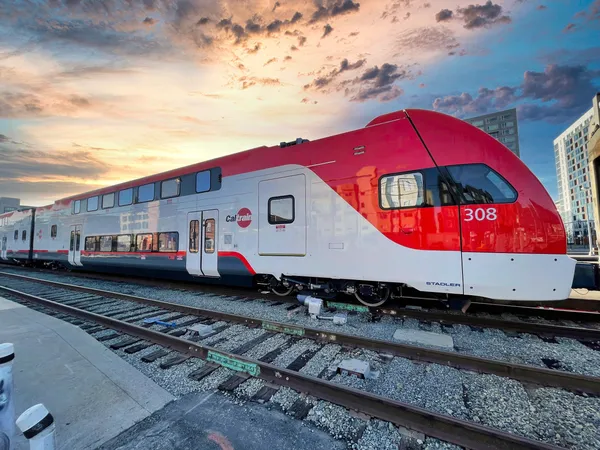
Generational Leap in Silicon Valley Passenger Rail Transit
SAN FRANCISCO, California — In the most significant passenger rail modernization in California in over a century, Caltrain and the Peninsula Corridor Joint Powers Board have officially inaugurated full passenger service across the completed $2.44 billion Caltrain Electrification Megaproject. Replacing decades-old diesel-electric locomotives with high-performance electric multiple unit (EMU) trainsets, the transformative initiative establishes modern, high-speed electrified commuter rail service along 51 miles of double-track corridor between San Francisco's 4th & King Station and San Jose Diridon Station.
Supported by federal capital investment grants from the Federal Transit Administration (FTA), state transit allocations through the California High-Speed Rail Authority, and local sales tax measures across San Francisco, San Mateo, and Santa Clara counties, the project delivers on a vision first proposed in the early 20th century. With electrification fully operational, express commuter travel times between San Francisco and downtown San Jose have been slashed to under 59 minutes, while midday and weekend train frequencies have been doubled to provide departure intervals every 30 minutes throughout the day.
Swiss-Built Stadler Electric Trains: Enhanced Acceleration, Speeds, and Amenities
Manufactured by Stadler US in Salt Lake City, Utah, Caltrain’s brand-new fleet of 23 seven-car bi-level electric trainsets introduces a dramatic upgrade in customer experience and transit performance. Drawing clean power from a 25 kV AC overhead catenary contact system, the lightweight EMUs accelerate and decelerate at twice the rate of legacy diesel locomotives, allowing trains to maintain top operational speeds of 79 miles per hour and recover quickly from station stops.
Inside the spacious double-decker passenger carriages, riders enjoy a forward-looking suite of amenities: digital seat-reservation indicators, free high-speed onboard Wi-Fi, individual power outlets at every seat, ambient LED illumination, and dynamic digital route maps providing real-time transit connections. Universal accessibility is prioritized with automated floor-level door transitions, fully ADA-compliant restrooms, and dedicated bicycle carriages equipped with secure racks capable of accommodating up to 72 bikes per trainset.
Overhead Catenary System and Substation Power Infrastructure
Delivering the electrification required complex civil, structural, and electrical engineering along an active commuter corridor that carries tens of thousands of daily riders. Working alongside primary contractor Balfour Beatty, engineering teams erected more than 3,000 massive steel catenary masts, strung over 100 miles of tensioned overhead copper contact wire, and modernized corridor safety with Communications-Based Positive Train Control (CBTC/PTC).
To power the fleet, Caltrain partnered with Pacific Gas and Electric Company (PG&E) to build two massive main traction power substations in South San Francisco and San Jose, alongside seven intermediate switching and paralleling stations. The redundant high-voltage power grid ensures uninterrupted electrical distribution while incorporating regenerative braking feeds that capture kinetic energy during deceleration and return it directly into the regional power grid.
Slashing Regional Carbon Emissions and Supporting Transit-Oriented Growth
Civic and transportation leaders from across the Bay Area underscored that Caltrain’s electrification serves as the economic and ecological backbone of Northern California. By displacing thousands of diesel locomotive engine hours each year, the zero-emission electric rail service eliminates an estimated 260,000 metric tons of greenhouse gas emissions annually—the environmental equivalent of removing 55,000 gasoline-powered automobiles from Highway 101 and Interstate 280.
By completely eliminating diesel exhaust fumes and localized particulate pollution from neighborhoods adjacent to the tracks, Caltrain establishes a clean, quiet, and high-capacity mass transit spine that anchors tens of thousands of new transit-oriented housing units and tech enterprise headquarters across the Silicon Valley peninsula for generations to come.
📰 Related Stories
- San Francisco Fleet Week 2026 Launches Along Embarcadero as Federal and Local Sweep Nets 84 Arrests San Francisco • Oct 05, 2026
- Unseasonal October Heat Wave Prompts Bay Area Alerts as Bernie Sanders Leads San Francisco Rally San Francisco • Oct 05, 2026
- San Francisco Board of Supervisors Expands Housing Oversight as Muni Gears Up for Fleet Week Operations San Francisco • Oct 05, 2026
- Los Angeles Establishes Measure ULA Oversight Benchmarks as LA Metro Advances Transit Zoning Under SB 79 Los Angeles • Oct 05, 2026