MBTA Restores Passenger Rail to Fall River and New Bedford After 65-Year Hiatus with $1.1 Billion South Coast Rail Launch
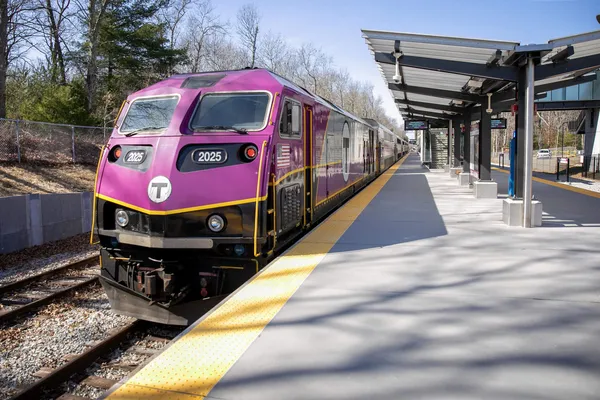
Restoring Historic Passenger Rail Connectivity to Southeastern Massachusetts
BOSTON, Massachusetts — In one of the most consequential transit equity achievements in the Commonwealth’s modern history, the Massachusetts Department of Transportation (MassDOT) and the Massachusetts Bay Transportation Authority (MBTA) have officially inaugurated revenue passenger service on the transformative $1.1 billion South Coast Rail Phase 1 project. Restoring direct commuter rail connections between Boston’s South Station and the historic South Coast cities of Fall River and New Bedford for the first time in over 65 years, the initiative fulfills a multi-decade public transit commitment to the region.
Prior to the line's commissioning, residents traveling from Fall River and New Bedford to downtown Boston faced grinding highway bottlenecks along Route 24 and Interstate 93 that regularly stretched commuter drive times past two hours. With the new Fall River/New Bedford commuter rail branch fully operational, travelers can now complete the journey in under 90 minutes aboard high-capacity, climate-controlled commuter rail trains, establishing a reliable, one-seat economic lifeline directly into Boston's core financial and medical districts.
Six Brand-New, Fully ADA-Accessible Commuter Rail Stations
The core infrastructure delivery of South Coast Rail Phase 1 encompasses six brand-new, modern passenger rail stations engineered to universal accessibility standards: Middleborough, East Taunton, Freetown, Fall River Depot, Church Street, and New Bedford. Each facility is constructed with full-length, 800-foot high-level boarding platforms that provide seamless, level boarding across all passenger coaches without steps.
Station amenities include architecturally sheltered waiting canopies, heated waiting enclosures, digital passenger information displays with real-time train tracking, tactile warning pavers, integrated local bus drop-off bays, secure bicycle storage, and expansive park-and-ride lots equipped with electric vehicle (EV) charging stations. At New Bedford and Fall River Depot, the stations serve as focal points for transit-oriented civic plazas designed to encourage pedestrian connectivity and commercial revitalization.
Comprehensive Civil Reconstruction, Signalization, and Layover Facilities
Delivering the passenger rail corridor required an extensive reconstruction of 37 miles of historically freight-only trackage. Engineering teams upgraded roadbeds with deep ballast, laid continuous welded steel rail, reconstructed 28 historic rail bridges, and modernized grade crossing protection across dozens of public roadway intersections with four-quadrant gates and audible warning systems.
The corridor operates under modern Positive Train Control (PTC) and Automatic Train Control (ATC) signaling systems, guaranteeing maximum passenger safety and headway efficiency. MassDOT and the MBTA also completed two full-service train layover facilities—the Weaver’s Cove layover in Fall River and the Wamsutta layover in New Bedford—enabling overnight fleet storage, interior maintenance, and prompt early-morning weekday departures.
Catalyzing Economic Growth and Regional Decarbonization
Massachusetts Governor Maura Healey, MassDOT Secretary Monica Tibbits-Nutt, and MBTA General Manager Phillip Eng emphasized that South Coast Rail represents a generational catalyst for regional prosperity and climate progress. By taking thousands of daily automobile trips off congested highways each day, the electrified transit link cuts greenhouse gas emissions while unlocking thousands of new housing units and job opportunities across Bristol and Plymouth counties.
📰 Related Stories
- Mayor Wu Proposes Targeted Tax Abatements to Unlock 1,400 Housing Units as State Awards $330M Boston • Oct 05, 2026
- Mayor Wu Advances Tax Abatements to Accelerate 1,400 Homes as MBTA Undertakes October Rail Modernization Boston • Oct 05, 2026
- Mayor Wu Proposes Tax Abatements to Unlock 1,400 Homes as MBTA Undertakes October Rail Modernization Boston • Oct 05, 2026
- Mayor Bowser Transmits 180-Acre RFK Master Plan to D.C. Council as WMATA Plans Stadium-Armory Overhaul Washington • Oct 05, 2026