CATS Launches 15-Minute Airport Sprinter Under 'Better Bus' as Charlotte Reviews $125M Housing Bonds
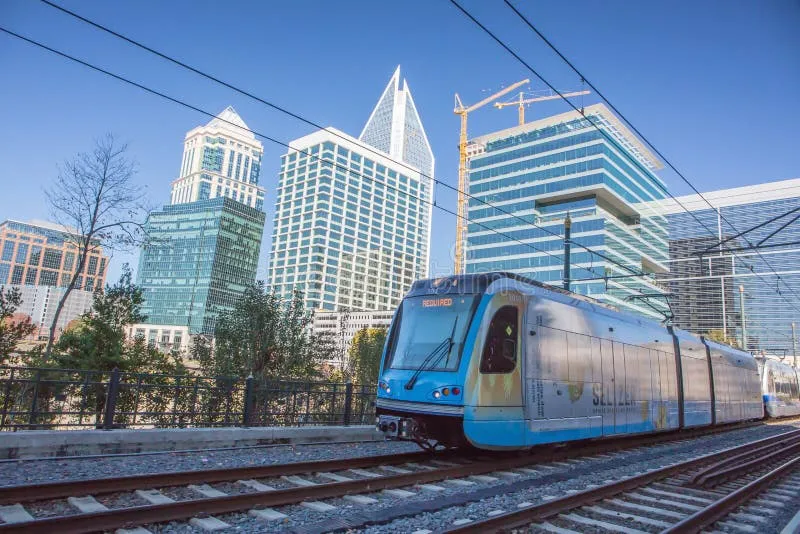
CATS Enacts October 5 Service Overhaul Featuring 15-Minute Airport Sprinter Headways
CHARLOTTE, North Carolina — Delivering widespread improvements funded by dedicated regional transit sales revenues, the Charlotte Area Transit System (CATS) officially enacted its annual autumn service enhancements on Monday, October 5, 2026. Under the flagship 'Better Bus' program, the transit agency boosted weekday service on core urban routes, notably establishing frequent 15-minute headways on the Route 5 Airport Sprinter connecting Uptown Charlotte directly to Charlotte Douglas International Airport (CLT).
The operational expansion also inaugurated Route 177 (North Meck Connector), linking Huntersville, Cornelius, and Davidson with Uptown, alongside new midday express trips on Route 64x along Independence Boulevard. Concurrently, CATS activated a brand-new CATS Micro zone across West Charlotte, providing on-demand, app-based microtransit until 9:00 PM daily to eliminate transit deserts in rapidly growing neighborhoods.
City Council Evaluates $125 Million Housing and $280 Million Transportation Bonds for 2027
At the Charlotte-Mecklenburg Government Center, city councilmembers conducted policy reviews on funding allocations for the proposed 2027 Municipal Bond Package. The financial blueprint earmarks $125 million for affordable housing programs alongside $280 million for regional transportation and streetscape improvements, channeling critical municipal capital into the city's priority 'Corridors of Opportunity'.
Municipal housing officials underscored that bond revenues will support catalytic transit-oriented developments like Joyfield Rise at Woodward, a 141-unit affordable residential community advancing near Camp North End, ensuring low- and moderate-income residents can remain in centrally connected neighborhoods.
Enhanced Safety Deployments Drive Measurable Declines in Transit Incidents
Complementing service frequency enhancements, CATS and the Charlotte-Mecklenburg Police Department reported significant improvements in system safety following the rollout of expanded transit security personnel and onboard safety technology. Security data revealed substantial drops in transit crime along the LYNX Blue Line light rail corridor during the third quarter of 2026.
Civic and mobility leaders emphasized that combining frequent airport transit links, flexible neighborhood microtransit, and historic housing bond commitments solidifies Charlotte’s standing as the premier multimodal hub of the Carolinas.
📰 Related Stories
- CATS Launches Expanded 'Better Bus' Network with 15-Minute Airport Sprinter as Red Line 30% Design Advances Charlotte • Oct 04, 2026
- Charlotte CATS Rolls Out 'Better Bus' Upgrades with 15-Minute Airport Sprinter as River District Breaks Ground on Mass-Timber Firehouse Charlotte • Oct 04, 2026
- CATS Implements Major Better Bus Service Expansion on October 5 with 15-Minute Headways and Contactless Fare Validators Charlotte • Oct 03, 2026
- Charlotte Rolls Out CATS 'Better Bus' Service Expansions as Council Refines $125 Million Housing Bond Policy Charlotte • Sep 30, 2026