Melbourne Reaps Transformative Benefits as $15 Billion Metro Tunnel Achieves Flawless High-Frequency Operations Across Five Landmark Underground Stations
Unlocking Half a Million Extra Commuters Across Victoria’s Rail Network
MELBOURNE, Victoria — In one of the most remarkable urban rail transformations in the southern hemisphere, the Victorian State Government and rail operator Metro Trains Melbourne are marking sustained operational triumphs as the generational $15+ billion Metro Tunnel project delivers full-capacity passenger services across Melbourne's rail network. Spanning twin 9-kilometre subterranean tunnels beneath the Yarra River and the central business district, the completed megaproject has systematically untangled the historic City Loop, unlocking room for more than 500,000 additional passengers every week.
The project represents the centerpiece of Victoria’s Big Build, establishing an unencumbered high-capacity railway linking the Sunbury line in the north-west directly to the Cranbourne and Pakenham lines in the south-east. Commuters along these busy growth corridors now bypass the bottlenecked Flinders Street and Southern Cross loop tracks, traveling directly through five world-class underground stations in the heart of the city.
Architectural Masterpieces at Arden, Parkville, State Library, Town Hall, and Anzac
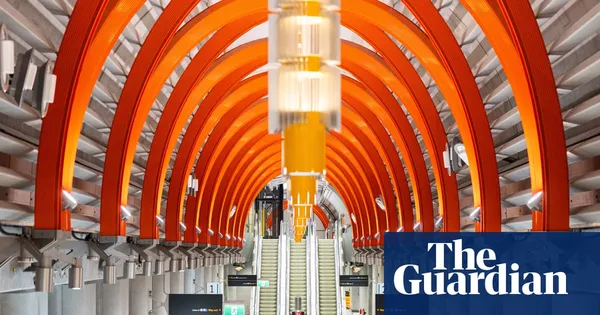
The five newly delivered underground stations—Arden, Parkville, State Library, Town Hall, and Anzac—stand as global benchmarks in transit architecture, urban design, and passenger accessibility. Designed with sweeping underground ticket concourses, glass platform screen doors, and generous natural daylighting shafts, each station connects vital cultural, medical, and educational districts with unprecedented speed.
At Parkville, direct underground pedestrian walkways link subway platforms directly into the Royal Melbourne Hospital, Peter MacCallum Cancer Centre, and the University of Melbourne, eliminating hazardous surface road crossings for thousands of healthcare workers, patients, and students. Meanwhile, at Anzac Station on St Kilda Road, Australia’s first direct tram-train interchange canopy allows commuters to transfer between underground trains and five surface tram routes in seconds without crossing busy road traffic.
High-Capacity Metro Trains and Cutting-Edge Digital Signalling
Operations through the Metro Tunnel are powered by Victoria’s fleet of 70 custom-engineered High Capacity Metro Trains (HCMT), built with walk-through seven-car carriages, dedicated accessibility priority areas, and real-time electronic journey displays. The corridor operates on cutting-edge High-Capacity Signalling (HCS) / CBTC technology, enabling automated train protection and precision headway management that allows trains to arrive every two to three minutes during peak windows.
The transition to computerized signaling not only improves travel time reliability but also drastically reduces traction energy consumption through regenerative electric braking, supporting Victoria’s legislated net-zero carbon targets.
Paving the Pathway for the Suburban Rail Loop and Statewide Growth
Victorian transport leaders emphasized that the proven success of the Metro Tunnel establishes the engineering foundation for the state's next generational undertakings, including major tunneling packages on the Suburban Rail Loop (SRL East) connecting Cheltenham to Box Hill. By demonstrating that ambitious, fact-based infrastructure investment delivers immense community and economic returns, Melbourne has firmly solidified its position as one of the world's most livable and transit-connected global metropolises.
📰 Related Stories
- Victoria and Federal Governments Advance Stage 2 of Melbourne Airport Rail, Unveiling 7.4-Kilometre Alignment and New Station at Keilor East Melbourne • Oct 03, 2026
- Victoria Accelerates Suburban Rail Loop East as Massive Tunnel Boring Machines Advance Across Melbourne Following Full Metro Tunnel Commercial Integration Melbourne • Oct 03, 2026
- Melbourne Integrates $11 Billion Metro Tunnel Network as TBMs Launch Tunnelling on $32.3 Billion Suburban Rail Loop East Melbourne • Sep 30, 2026
- Brisbane Submits Ambitious Active Transport Bids for Pallara and Shafston Corridors as Brisbane Metro Eyes Capalaba Expansion Ahead of 2032 Games Brisbane • Oct 04, 2026