D.C. Council Evaluates Final RFK Campus Master Plan as Housing Committee Advances Landlord Accountability Reforms
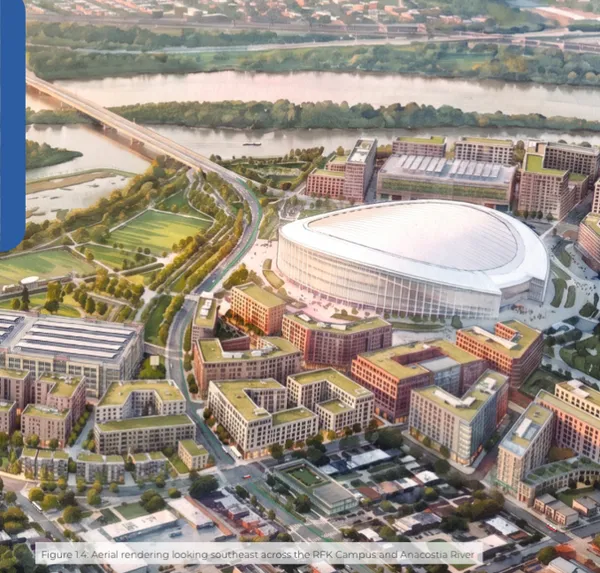
D.C. Council Reviews Final 180-Acre RFK Campus Master Plan
WASHINGTON, D.C. — Navigating a decisive legislative milestone for the District of Columbia’s eastern riverfront, the Council of the District of Columbia accelerated formal review in October 2026 of the finalized RFK Campus Master Plan. Officially transmitted by Mayor Muriel Bowser and the D.C. Office of Planning following a September 30 public oversight hearing, the binding 180-acre development blueprint establishes land-use, zoning, and transit frameworks heading toward a final Council adoption vote before the end of the year.
The redevelopment vision balances a state-of-the-art 65,000-seat multi-purpose stadium—targeted as the future home of the NFL's Washington Commanders for a 2030 kickoff—with generational civic infrastructure. Concurrently, environmental crews are completing the final closeout of the physical demolition of the historic RFK Stadium in October 2026, leaving shovel-ready parcels for civil construction.
6,500 Mixed-Income Homes with Enforceable 30% Affordability Mandate
Addressing District housing needs, the master plan mandates the construction of between 5,500 and 6,500 new residential units, with an enforceable statutory requirement that at least 30 percent must remain permanently affordable for working-class households. The neighborhood plan integrates local retail, full-service grocery stores, child-care facilities, and dedicated business incubators for Ward 7 and Ward 8 entrepreneurs.
More than 76 acres will be preserved as contiguous public parkland and natural riverfront open space, connecting ecological wetlands around Kingman Lake to the Anacostia Riverwalk Trail. Transit planning prioritizes pedestrian connections and substantial platform and mezzanine upgrades at WMATA's Stadium-Armory Metro station to accommodate high-volume game-day and residential ridership.
Housing Committee Advances Housing Investment Protection Act of 2026
Across the city at the John A. Wilson Building, the D.C. Council’s Committee on Housing, chaired by Councilmember Robert White, convened high-profile roundtables examining landlord accountability and tenant rights. Committee members advanced consideration of the Housing Investment Protection Act of 2026, which proposes mandating full transparency of the individual owners behind limited liability companies (LLCs) holding residential real estate.
The proposed legislative reforms also restrict municipal subsidy allocations to developers with unresolved housing maintenance or code violations. District leaders highlighted that coupling strong tenant safeguards with transformative riverfront housing ensures sustainable, equitable growth across Washington.
📰 Related Stories
- D.C. Council Reviews Final RFK Campus Master Plan Delivering 6,500 Homes, Gold Line BRT, and 30% Affordability Mandate Washington • Oct 03, 2026
- D.C. Council Holds Decisive Hearing on 180-Acre RFK Campus Master Plan Delivering 6,500 Homes and Gold Line Rapid Transit Washington • Sep 30, 2026
- D.C. Council Holds Decisive Public Hearing on Final 180-Acre RFK Campus Master Plan as Bowser Advances 1,200 New Homes Washington • Sep 30, 2026
- Philadelphia Department of Aviation Unveils $2B 'Transform PHL' as Parker Administration Advances Housing and Tech Rules Philadelphia • Oct 03, 2026