Chicago Advances $5.7 Billion CTA Red Line Extension as Groundbreaking Commences on 5.5-Mile Far South Side Rapid Transit Corridor
Historic Groundbreaking on Far South Side Rapid Transit Corridor
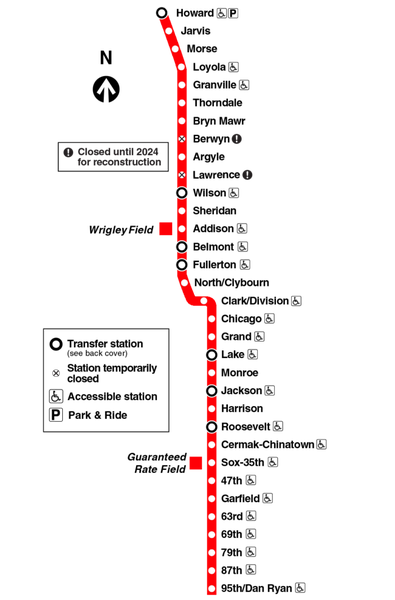
CHICAGO, Illinois — In a transformative development for urban transportation equity, the Chicago Transit Authority (CTA) and Mayor Brandon Johnson have officially broken ground on the landmark $5.7 billion Red Line Extension (RLE) project. Marking the culmination of decades of community advocacy and municipal planning, civil contractors have launched heavy construction to extend Chicago's busiest rail line by 5.5 miles southward from its long-standing terminus at 95th/Dan Ryan to a new multimodal terminal at 130th Street.
Backed by historic federal capital grant funding through the Federal Transit Administration (FTA) Capital Investment Grants program, the monumental infrastructure undertaking is engineered to eliminate systemic transit disparities, connecting Far South Side neighborhoods directly into Chicago's economic and cultural core.
Four Modern Accessible Stations and 120th Street Rail Complex
The 5.5-mile extension introduces four brand-new, fully ADA-compliant rapid transit stations strategically located near 103rd Street, 111th Street, Michigan Avenue (near 116th Street), and 130th Street. Each station is designed with heated passenger platforms, high-definition digital signage, bright architectural canopies, bus turnaround bays, and multimodal park-and-ride commuter lots.
Complementing the new stations, the CTA is constructing a state-of-the-art rail stabling and heavy maintenance facility near 120th Street. Spanning tens of acres, the rail yard will support modern train inspection shops, reduce deadhead travel miles, and allow the CTA to optimize Red Line headways and rolling stock reliability across the entire metropolitan network.
Substantial Commute Reductions and Neighborhood Economic Mobility
For transit-reliant residents across Roseland, Pullman, West Pullman, and Altgeld Gardens, the Red Line Extension will deliver dramatic daily travel time savings. Daily commutes from 130th Street to the downtown Chicago Loop will be cut by up to 30 minutes in each direction—returning an hour of personal time each day to working families.
By replacing crowded transfer bus routes with high-speed heavy rail transit, the extension directly connects South Side workers to major healthcare campuses, universities, and commercial employers without requiring car ownership.
Workforce Creation and Transit-Oriented Revitalization
The multi-billion-dollar project functions as a massive regional economic catalyst, projected to create more than 12,000 local construction and engineering jobs while enforcing rigorous Disadvantaged Business Enterprise (DBE) contracting standards. In coordination with the Chicago Department of Planning and Development (DPD), transit-oriented development (TOD) zoning incentives are rolling out around each station precinct to attract neighborhood grocery stores, mixed-income housing developments, and thriving local retail enterprises, establishing an enduring foundation for Far South Side prosperity.
📰 Related Stories
- Northern Illinois Transit Authority Assumes Oversight Over CTA and Metra as Chicago Installs Michigan Avenue Bus Lane Chicago • Oct 03, 2026
- CTA and Walsh-VINCI Finalize Engineering for $2.9B Red Line Extension as Council Transportation Committee Convenes Hearing Chicago • Oct 03, 2026
- Chicago Debuts First LaSalle Street Office-to-Housing Conversion at Bellwether as City Expands Divvy Bike-Share Network Chicago • Sep 30, 2026
- Chicago Advances Historic $5.7 Billion CTA Red Line Extension as Walsh-VINCI Joint Venture Drills Foundations for Four Far South Side Stations Chicago • Sep 30, 2026