San Francisco Advances Downtown Revitalization Financing District and Expands Muni Transit Corridors to Accelerate Commercial-to-Residential Conversions
Pioneering Financing Model to Transform Downtown Office Space
SAN FRANCISCO, California — In a decisive move to revitalize its post-pandemic commercial core, the City and County of San Francisco has officially established the Downtown Revitalization Financing District (DRFD). The initiative provides commercial property owners and housing developers with an innovative tax increment financing structure, allowing incremental property tax revenues generated by adaptive reuse projects to directly subsidize the capital-intensive costs of converting underutilized downtown office towers into modern residential communities.
The innovative district represents a cornerstone of the city’s economic recovery blueprint, designed to lower financial hurdles for commercial developers. It complements municipal legislation that exempts qualifying adaptive reuse projects from inclusionary housing mandates and transfer fees for the first seven million square feet of converted office space, paving the way for thousands of new permanent residents across the Financial District and South of Market (SoMa).
SFMTA Enhances Muni Service Along High-Demand Commuter Corridors
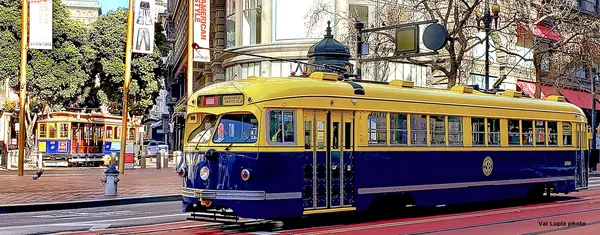
To support downtown residential densification and sustainable urban transit, the San Francisco Municipal Transportation Agency (SFMTA) has implemented targeted service expansions across critical bus and rail routes. Frequency and capacity boosts have been rolled out on heavily traveled corridors, including the 1 California, the N Judah light rail line, the 5R Fulton Rapid, the 22 Fillmore, the 29 Sunset, and the 38R Geary Rapid.
The agency accomplished these frequency increases through roughly $250 million in operational efficiencies and cost-saving reorganizations, allowing for service improvements without creating additional budget deficits. In parallel, SFMTA has intensified its 'Fix-It Week' preventative maintenance blitzes along the subterranean Market Street Subway, rehabilitating switches, overhead catenary wiring, and track assemblies to ensure reliable turn-up-and-go headways.
Pedestrian Activation and Streetscape Modernization
Civic infrastructure improvements are moving forward in lockstep with transit upgrades under the South Downtown Design and Activation Plan. Construction on the Main Street Streetscape Project is actively transforming the East Cut neighborhood, adding widened pedestrian sidewalks, protected cycling tracks, high-visibility pedestrian curb ramps, and shade trees to encourage active foot traffic.
At the ground level, Community Benefit Districts (CBDs) and the Office of Economic and Workforce Development (OEWD) are sponsoring recurring artisan street markets, outdoor dining plazas, and community safety ambassador patrols, actively reimagining the traditional 9-to-5 financial district into an attractive 24/7 urban destination.
A Sustainable Blueprint for Long-Term Urban Resilience
Municipal planners and business leaders stress that coupling tax incentives with robust public transit accessibility provides a national blueprint for urban renewal. By diversifying the downtown tax base, integrating academic satellite campuses, and converting vacant commercial square footage into thriving residential neighborhoods, San Francisco is building an enduring foundation for economic prosperity and long-term vitality.
📰 Related Stories
- San Francisco Enters Final Campaign for Prop H Parcel Tax to Avert 30% Transit Cuts as 7,200-Home Candlestick Project Breaks Ground San Francisco • Oct 03, 2026
- San Francisco Rallies Around Transit Funding Measures to Avert 2027 Deficit as SB 79 Accelerates Housing Groundbreakings San Francisco • Sep 30, 2026
- San Francisco Advances Potrero Yard Modernization and BART Transit Housing to Expand Core Muni Capacity and Deliver Mixed-Income Communities San Francisco • Sep 30, 2026
- RTC Las Vegas Red Line BRT Enters Full Autumn Service as Clark County Implements Maryland Parkway Workforce Housing Nodes Las Vegas • Oct 03, 2026