CATS Enforces New Station Area Principles for 29-Mile Red Line as Charlotte Advances $37.9M Design and Better Bus Routes
CATS Establishes Station Area Development Principles for 29-Mile Red Line
CHARLOTTE, North Carolina — Reshaping regional commuter transportation while protecting historic neighborhood integrity, the Charlotte Area Transit System (CATS) and the Charlotte City Council formally unveiled comprehensive Station Area Development Principles in early October 2026 for the proposed 29-mile Red Line commuter rail corridor. Connecting Uptown Charlotte northward through Huntersville, Cornelius, Davidson, and Mooresville, the rail project is advancing through a $37.9 million preliminary engineering contract targeting 30 percent design completion.
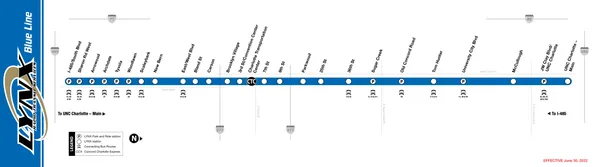
Drawing critical lessons from the Lynx Blue Line corridor, where rapid transit investment spurred gentrification and land-value spikes, the new framework mandates inclusionary affordable housing within station districts, deploys commercial rent stabilization mechanisms for legacy small businesses, and establishes neighborhood workforce priority zones.
Better Bus Network Expands Frequencies and Deploys Route 177
While long-term rail engineering progresses, CATS celebrated immediate commuter dividends through the full deployment of its Better Bus Program under the 2055 Transit System Plan. The agency enhanced weekday frequencies to 15-minute intervals along six high-ridership trunk corridors—including the Airport Sprinter, Central Avenue, and Kings Drive—while officially inaugurating Route 177 (North Meck Connector) to serve major northern job centers.
The City Council’s Housing & Neighborhood Services Committee aligned municipal capital by dedicating top scoring preference for its $125 million housing bond to multifamily projects located within a half-mile of high-frequency CATS transit stations.
Equitable Transit-Oriented Growth for the Queen City
Civic organizers and urban transportation analysts praised Charlotte’s coordinated strategy. By tying commuter rail design directly to anti-displacement housing mandates and expanding immediate bus rapid networks, Charlotte is establishing a model for sustainable, socially inclusive urban mobility across the Southeast.
📰 Related Stories
- Charlotte Rolls Out CATS 'Better Bus' Service Expansions as Council Refines $125 Million Housing Bond Policy Charlotte • Sep 30, 2026
- Charlotte Launches 'Skilled to Build' Workforce Initiative as City Council Prepares $405 Million Bond Referendums for Transit and Housing Charlotte • Sep 29, 2026
- Charlotte and NCDOT Finalize $300 Million I-77 Community Benefits Accord as CATS Advances Red Line Commuter Rail Design Charlotte • Sep 28, 2026
- D.C. Council Reviews Final RFK Campus Master Plan Delivering 6,500 Homes, Gold Line BRT, and 30% Affordability Mandate Washington • Oct 03, 2026