Glasgow Subway Advances Driverless Unattended Operation as SPT Completes Half-Height Platform Screen Doors Across All 15 Subterranean Stations
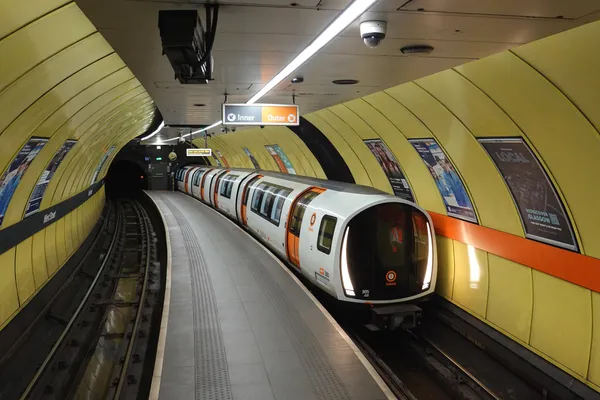
Completing Half-Height Platform Screen Doors Across the 10.5-Kilometre Loop
GLASGOW, Scotland — In a transformative leap forward for Scottish public transportation, Strathclyde Partnership for Transport (SPT) has entered the final integration phase for fully automated Unattended Train Operation (UTO / GoA4) across the historic Glasgow Subway. The landmark £288 million modernisation programme achieved a crucial civil milestone with the successful installation and testing of bespoke half-height Platform Screen Doors (PSDs) across all 15 underground stations along the twin-track circular network.
As the world’s third-oldest underground metro system after London and Budapest, having originally opened in 1896, the Glasgow Subway is undergoing its most comprehensive technological overhaul in over four decades, replacing legacy manual train systems with fully automated, digital train supervision.
17 Custom Stadler Walk-Through Trains Transition to Autonomous Control
Central to the operational revolution is the complete fleet transition to 17 custom-engineered four-car walk-through trains built by Swiss manufacturer Stadler. Having already replaced the older rolling stock under supervised driver operations, the trainsets are now undergoing live dynamic testing during night windows and scheduled weekend test campaigns to validate automated acceleration, precision station alignment, and door-synch interfaces.
The trains feature wide continuous gangways, level-access boarding ramps coordinated with station platforms, full passenger climate control, and digital passenger information screens displaying live journey metrics. Equipped with regenerative electrodynamic braking, the fleet returns electrical power directly into the third-rail distribution network during deceleration, reducing systemwide energy demand by up to 25%.
Advanced CBTC Digital Signaling and Broomloan Operations Control
Underpinning the autonomous transition is a cutting-edge Communications-Based Train Control (CBTC) digital signaling architecture provided by Hitachi Rail and Ansaldo STS. Operating from the modernized Broomloan Depot Operations Control Centre in Govan, the system uses continuous bi-directional radio data to pinpoint train positions to within centimeters, allowing headway intervals between trains to shrink significantly during peak rush hours.
The half-height platform screen doors form an essential safety layer for driverless service, mechanically sealing platform edges and only opening when an arriving train is fully stopped and perfectly aligned, effectively eliminating the risk of track falls or platform congestion incidents.
Extended Weekend Operating Hours to Invigorate Glasgow's Night Economy
Once full UTO commissioning is finalized, SPT plans to leverage the operational flexibility of driverless transit to deliver long-requested service enhancements, including extended operating hours beyond midnight on Friday and Saturday evenings. Regional transport leaders and civic business groups emphasized that extended subway schedules will provide safe, dependable, zero-emission late-night mobility for hospitality workers, theatergoers, and students, providing a powerful economic stimulus across Glasgow's vibrant city center and West End districts.
📰 Related Stories
- Glasgow Subway Advances to Final Driverless Readiness Testing Following Platform Screen Door Rollout Glasgow • Sep 25, 2026
- Former Detectives Say Early Suspicions of Emma Caldwell’s Killer Were Ignored Glasgow • Apr 06, 2026
- Underworld Unravelled as Four Men Face Court Over Firebomb Attacks in Scotland's Gang War Glasgow • May 27, 2025
- City of Edinburgh Council Approves Strategic Business Case for £1.7 Billion South Tram Extension to BioQuarter and Royal Infirmary Edinburgh • Sep 29, 2026