Gateway Program Launches First Tunnel Boring Machines for $16 Billion Hudson Tunnel Project as Crews Begin Digging New Rail Link to New York Penn Station
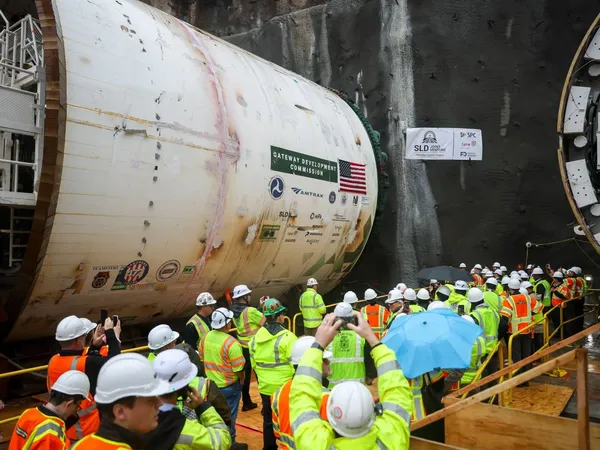
Historic Tunnel Boring Operations Begin on America's Crucial Rail Corridor
NEW YORK CITY, New York — Marking a monumental turning point for passenger rail reliability across the Northeast Megaregion, the Gateway Development Commission (GDC), alongside New York and New Jersey state leaders and federal transportation authorities, has officially commenced tunnel boring operations on the landmark $16 billion Hudson Tunnel Project. Engineering crews have deployed massive, custom-built Tunnel Boring Machines (TBMs) at the western portal in North Bergen, New Jersey, initiating the subterranean excavation of twin passenger rail tubes that will connect the Northeast Corridor directly into New York Penn Station.
The milestone represents the most significant investment in American passenger rail infrastructure in more than a century, delivering long-overdue redundancy and capacity to a rail bottleneck that carries over 200,000 daily passenger trips between Washington, D.C., New York City, and Boston.
5,100-Foot Palisades Tunnel Package Driven by Schiavone-Lane-Dragados
Under the project's primary civil works contract, the Palisades Tunnel package is being executed by the Schiavone-Lane-Dragados Joint Venture. The specialized hard-rock TBMs are engineered to bore approximately 5,100 linear feet through the dense diabase rock of the Palisades formation at an average rate of 30 to 35 feet per day. The machines will carve twin 29-foot-diameter tubes progressing toward the Hudson County Shaft in Weehawken, where they will interface with subsequent underwater soft-ground tunnel segments beneath the Hudson River.
Simultaneously, major ground stabilization operations and slurry wall construction are advancing rapidly along the Manhattan riverbed shoreline, preparing the eastern receiving shaft between 11th and 12th Avenues adjacent to Hudson Yards and the Penn Station rail throat.
Rehabilitating 115-Year-Old North River Tunnels Post-Commissioning
With seven of ten comprehensive construction packages now completed or actively underway, the Hudson Tunnel Project remains on track to achieve revenue operations by 2035. Once the new twin-track rail tubes are fully commissioned, Amtrak and NJ TRANSIT will systematically divert traffic into the state-of-the-art alignment, allowing engineers to temporarily take the existing 115-year-old North River Tunnels out of service for complete structural rehabilitation.
The legacy tubes suffered severe seawater and chemical deterioration during Superstorm Sandy in 2012. The subsequent overhaul, scheduled for completion by 2038, will replace century-old electrical bench walls, install high-efficiency overhead catenary wire, and modernize signaling systems, ultimately delivering four fully hardened, reliable tracks beneath the Hudson River.
Catalyzing National Economic Productivity and Clean Mass Transit
Supported by more than $11 billion in federal grants through the Federal Railroad Administration (FRA) and the Federal Transit Administration (FTA) alongside matching commitments from New York and New Jersey, the Gateway Program is estimated to generate upwards of 95,000 regional jobs and inject tens of billions of dollars into the national economy. Federal and municipal officials affirmed that modernizing the trans-Hudson rail link ensures decades of economic resilience, mitigates highway congestion, and provides a sustainable, low-carbon transport spine for millions of intercity commuters.
📰 Related Stories
- NYC Council and CUNY Launch Free Unlimited OMNY Pilot for Students as Portal North Bridge Enters Final Rail Transition New York City • Sep 30, 2026
- NYC Expands 100 Gold Street Redevelopment to 4,000 Apartments as MTA Advances $800M Hudson Line Climate Defense New York City • Sep 30, 2026
- Gateway Hudson Tunnel Commences Subterranean Boring as NYC Advances 180-Acre Sunnyside Yard Master Plan New York City • Sep 29, 2026
- Mayor Cherelle Parker Launches Housing Dashboard Reaching 16,394 Homes as SEPTA Protects Regional Rail Operations Philadelphia • Sep 30, 2026