Massachusetts High Court Upholds MBTA Communities Housing Law as Boston Fights for $20 Million Roxbury Transit Grant
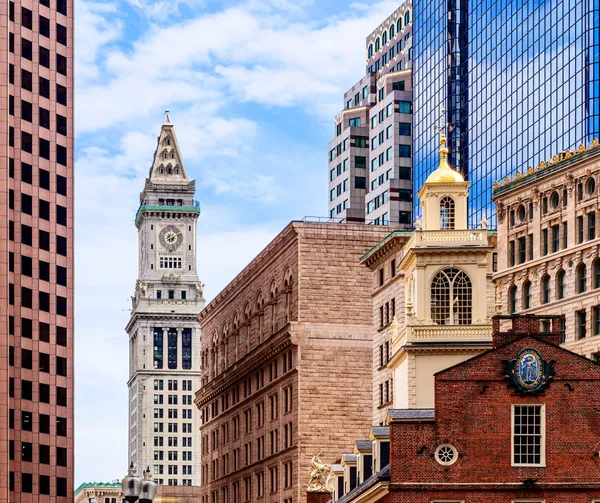
Supreme Judicial Court Unanimously Affirms MBTA Communities Housing Law
BOSTON, Massachusetts — In a monumental legal victory for housing supply and transit-oriented development across the Commonwealth, the Massachusetts Supreme Judicial Court (SJC) affirmed the complete dismissal of legal challenges against the MBTA Communities Act in late September 2026. The unanimous ruling solidifies the state mandate requiring 177 municipalities served by the Massachusetts Bay Transportation Authority (MBTA) to establish zoning districts permitting multifamily housing as-of-right near transit stations.
Housing policy experts and urban planners praised the high court's decision, projecting it will unlock tens of thousands of transit-accessible apartments and townhomes throughout Greater Boston. By curbing restrictive single-family zoning within walking distance of commuter rail and subway nodes, the statute creates an enforceable framework to alleviate eastern Massachusetts' acute housing shortage.
City of Boston Sues Federal Government Over Revoked $20 Million Transit Grant
Concurrently, the City of Boston, under Mayor Michelle Wu, took decisive legal action by filing a federal lawsuit challenging the abrupt withdrawal of a $20 million RAISE grant intended for the Roxbury Resilient Corridors project. The vital civil works initiative was designed to reconstruct bus lanes, install pedestrian safety islands, and modernize traffic signaling along Melnea Cass Boulevard and Warren Street in Roxbury.
City legal counsel argued that the federal decision to strip infrastructure funding was arbitrary, unlawful, and directly harms working-class communities that depend heavily on high-frequency MBTA bus lines. Boston officials affirmed their determination to defend federal infrastructure commitments that protect pedestrian lives and speed bus commutes.
Community Preservation Funds and $700,000 in Public Health Grants Deployed
At City Hall, the Boston City Council evaluated zoning updates to regulate urban data centers and approved millions in Community Preservation Fund appropriations for historic preservation and neighborhood open spaces. Simultaneously, the city debuted a new $700,000 round of Community Overdose Response Grants, building upon municipal strategies that achieved an unprecedented 29 percent reduction in deadly drug overdoses.
Mayor Wu reiterated that Boston will continue championing bold public transit investments, accessible housing density, and compassionate neighborhood health initiatives to foster a resilient, equitable city.
📰 Related Stories
- MassDOT and MBTA Break Ground on $1.28 Billion North Station Draw One Bridge Replacement and Advance $600 Million Commuter Rail Modernization Boston • Sep 29, 2026
- Boston Gathers Community Feedback on Blue Hill Avenue Protected Busway as Mayor Wu and Council Advance Housing Measures Boston • Sep 28, 2026
- Mayor Wu Proposes Targeted Tax Abatements to Unlock 1,400 Boston Homes as Emergency Crews Manage Coastal Storm Boston • Sep 27, 2026
- MBTA Advances Green Line Transformation with CAF USA Pilot Testing of 102 Type 10 Supercars to Enable 100% Low-Floor Boarding Across Boston Boston • Sep 26, 2026