Melbourne Integrates $11 Billion Metro Tunnel Network as TBMs Launch Tunnelling on $32.3 Billion Suburban Rail Loop East
A Generational Transformation of Victoria's Passenger Rail Spine
MELBOURNE, Victoria — Marking the most significant rail network transformation in modern Australian history, the Victorian Government and the Victorian Infrastructure Delivery Authority (VIDA) have fully integrated the landmark $11+ billion Metro Tunnel project into regular passenger timetable operations. The 9-kilometre twin rail tunnels seamlessly connect the Sunbury Line in Melbourne's north-west directly through to the Cranbourne and Pakenham lines in the south-east, creating a dedicated high-capacity rail artery that untangles long-standing congestion inside the historic City Loop.
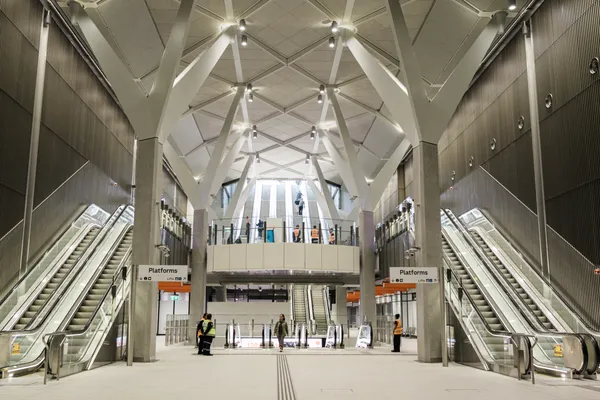
Riders across metropolitan Melbourne are now commuting through five architecturally stunning, deep-underground stations: Arden, Parkville, State Library, Town Hall, and Anzac. Equipped with full-height glass platform screen doors, automated train safety systems, and cavernous passenger concourses, the new stations unlock direct rail access to Melbourne's world-class biomedical precinct, prestigious tertiary universities, and dynamic arts boulevard along St Kilda Road.
TBMs 'Alice' and 'Hacia' Chew Through Rock on Suburban Rail Loop East
As Metro Tunnel operations hit full stride, major subterranean civil engineering has officially begun on the $32.3 billion Suburban Rail Loop (SRL) East. Massive 1,000-tonne Tunnel Boring Machines (TBMs), christened 'Alice' and 'Hacia', have been successfully launched and are currently excavating twin tunnels between Burwood and Glen Waverley.
Following a comprehensive capital review that streamlined station interfaces and pedestrian linkages, the dedicated 26-kilometre SRL East underground line remains firmly on track for commercial passenger services by 2035. The driverless rail corridor will directly connect six major middle-suburban hubs—Cheltenham, Clayton, Monash, Glen Waverley, Burwood, and Box Hill—slashing cross-city commute times and eliminating the necessity of traveling into the CBD for suburban transfers.
Network-Wide Tap-and-Go Contactless Ticketing Revolution
Complementing mega-tunnel civil engineering, public transport across Victoria is benefiting from the successful, phased rollout of contactless 'tap-and-go' ticketing technology. Commuters throughout the metropolitan transit network can now board trains, iconic Melbourne trams, and regional buses by simply tapping physical credit cards, debit cards, or digital wallets on smartphones and smartwatches.
The digital fare system eliminates the need to purchase or reload physical transit cards, modernizing visitor navigation and accelerating passenger boarding across hundreds of tram stops and suburban rail stations.
Building Connected, High-Density 20-Minute Neighborhoods
Victorian planning authorities are capitalizing on these major mass-transit arteries by establishing high-density, mixed-use structure plans around SRL and Metro Tunnel stations. Key urban renewal precincts, notably the Arden urban renewal precinct and Clayton health precinct, are slated to host tens of thousands of sustainable apartments, life-science research laboratories, and leafy pedestrian plazas within a 20-minute neighborhood framework.
State infrastructure ministers affirmed that pairing high-capacity subterranean rail tunnels with automated orbital orbital transport and seamless digital ticketing guarantees Melbourne will retain its coveted liveability and economic dynamism as its metropolitan population expands toward 6 million residents.
📰 Related Stories
- Victoria and Federal Governments Advance Stage 2 of Melbourne Airport Rail, Unveiling 7.4-Kilometre Alignment and New Station at Keilor East Melbourne • Oct 03, 2026
- Victoria Accelerates Suburban Rail Loop East as Massive Tunnel Boring Machines Advance Across Melbourne Following Full Metro Tunnel Commercial Integration Melbourne • Oct 03, 2026
- Victoria Launches 1,000-Tonne TBM Alice from Burwood as Subterranean Excavation Commences on $34.5 Billion Suburban Rail Loop East Melbourne • Sep 27, 2026
- Sydney Metro Commences Systems and Dynamic Train Testing on 23-Kilometre Western Sydney Airport Line Following Fleet Unveiling at Orchard Hills Sydney • Oct 03, 2026