NSW Advances Subsea Excavation on $14 Billion Western Harbour Tunnel as Mega-TBMs 'Patyegarang' and 'Barangaroo' Drill Beneath Sydney Harbour
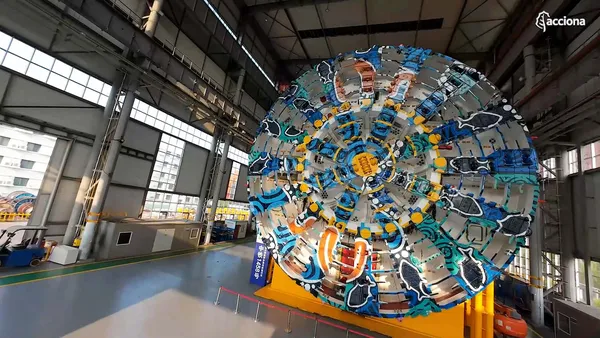
Historic Subsea Engineering Feat Beneath Iconic Sydney Harbour
SYDNEY, New South Wales — In an unprecedented civil engineering milestone for Australia's largest transport infrastructure portfolio, the New South Wales Government and delivery partner Acciona have confirmed that both colossal Tunnel Boring Machines (TBMs) are actively excavating the deep subsea alignment for the $14 billion Western Harbour Tunnel. Operating at depths of up to 50 metres below sea level, the dual mega-machines—christened 'Patyegarang' and 'Barangaroo' in honor of legendary Aboriginal historical figures—represent the largest tunnel boring machines ever deployed in the Southern Hemisphere.
Assembled underground within massive, custom-excavated caverns at Birchgrove, the high-precision slurry shield machines are methodically advancing through sandstone and marine sediment to carve out the 1.5-kilometre subterranean crossing directly beneath Sydney Harbour, forging an indispensable new arterial bypass for the nation’s largest metropolis.
Unlocking Sydney's Gridlocked Arterial Bottlenecks
The Western Harbour Tunnel encompasses 6.5 kilometres of dual three-lane tunnels connecting the recently completed Rozelle Interchange in Sydney's Inner West directly with the Warringah Freeway in North Sydney. By providing a direct western bypass of the Sydney CBD, the mega-tunnel is engineered to divert up to 50,000 vehicles per day away from the severely congested ANZAC Bridge, Western Distributor, and the iconic Sydney Harbour Bridge corridor.
Commuters traveling between Western Sydney, Parramatta, and the North Shore will see peak-hour travel times slashed by up to 20 minutes per journey, unlocking billions of dollars in commercial freight efficiency and smoothing public transport express bus routes across the harbour.
State-of-the-Art Environmental and Slurry Shield Engineering
Because the tunneling passes beneath sensitive maritime waterways, environmental management has been prioritized to the highest global standards. The project uses advanced pressurized slurry shield TBM technology, which continuously balances hydrostatic water pressures at the tunnel face while isolating marine habitats above from vibration and disturbance.
Excavated spoil is pumped through an enclosed subterranean pipeline to a high-capacity treatment plant at the surface, where rock and sand are filtered, dewatered, and repurposed as recycled structural fill for regional road projects across New South Wales. Water quality monitoring stations deployed across the harbour confirm that marine ecosystems remain completely undisturbed by the ongoing deep-level subterranean boring.
Transforming Regional Connectivity Ahead of 2028 Completion
NSW transport ministers and infrastructure leaders highlighted that the Western Harbour Tunnel represents the final transformational piece of Sydney’s integrated motorway puzzle. Once completed in 2028, the tunnel will seamlessly link into WestConnex, the M4-M8 link, and the future Beaches Link, delivering an uninterrupted high-speed bypass network spanning over 30 kilometres.
By removing heavy freight and through-traffic from surface-level neighborhood streets in Balmain, Rozelle, and North Sydney, the project creates unprecedented opportunities to reclaim local street space for wider pedestrian boulevards, dedicated cycleways, and tree-lined community green corridors.
📰 Related Stories
- Sydney Metro Completes 106 Kilometres of Rail Tracklaying on Western Sydney Airport Line Ahead of Dynamic Train Testing Sydney • Sep 27, 2026
- Sydney Metro Southwest Completes Comprehensive Trial Running Across 10 Upgraded Stations Ahead of October Launch Sydney • Sep 26, 2026
- Western Sydney International Airport Enters Final Operational Readiness Trials for October 25 Passenger Launch Sydney • Sep 25, 2026
- ACT Government Completes Station Canopies and Installs Wire-Free Green Track on Canberra Light Rail Stage 2A Linking City South to Commonwealth Park Canberra • Sep 26, 2026