Victoria Launches 1,000-Tonne TBM Alice from Burwood as Subterranean Excavation Commences on $34.5 Billion Suburban Rail Loop East
A Historic Subterranean Milestone for Australian Megaprojects
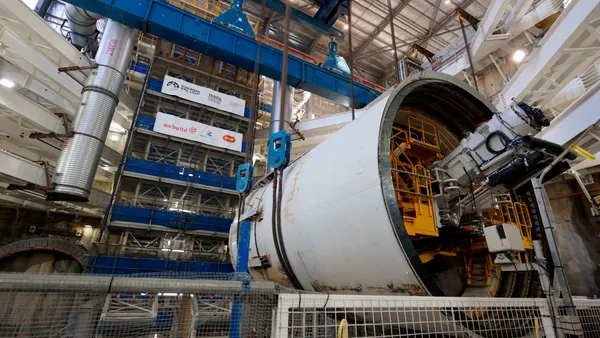
MELBOURNE, Victoria — In an extraordinary civil engineering milestone for Victoria’s 'Big Build', the Victorian Government and the Suburban Rail Loop Authority (SRLA) have officially launched the first massive Tunnel Boring Machine (TBM) for the transformational Suburban Rail Loop (SRL) East. Ceremonially christened 'Alice'—in honor of pioneering education reformer Alice Hoy—the 1,000-tonne, 100-metre-long earth pressure balance tunneling leviathan has commenced mechanical excavation from the deep launch box at Burwood, beginning the construction of 26 kilometres of twin subterranean rail tunnels connecting Cheltenham to Box Hill.
The launch marks the definitive physical transition into heavy tunneling on the $34.5 billion first stage of the 90-kilometre orbital rapid transit loop that will ultimately encircle metropolitan Melbourne.
Precision Twin-Bore Tunneling Across Six Strategic Suburban Precincts
TBM Alice is actively boring northward toward Glen Waverley, carving out reinforced underground tubes beneath Melbourne's eastern suburbs at depths of up to 30 metres. A second mega-machine, 'Hacia', is following in tight formation from Burwood to excavate the parallel tunnel. Concurrently, southern tunneling operations are preparing to mobilize from the Clarinda stabling and launch facility, where twin TBMs will drive south toward Cheltenham.
SRL East delivers six brand-new, architecturally striking underground stations at Cheltenham, Clayton, Monash, Glen Waverley, Burwood (serving Deakin University), and Box Hill. Delivered by major international tunneling consortia Suburban Connect and Terra Verde, the line will be lined with tens of thousands of precision-engineered precast concrete segments manufactured locally in Victoria.
Automated Driverless Rolling Stock and Linewide Digital Control
The Suburban Rail Loop introduces a technological paradigm shift to Australian heavy rail through the deployment of dedicated four-car, fully automated Grade of Automation 4 (GoA4) driverless trainsets. Procured through the international TransitLinX Alliance (comprising Alstom, John Holland, KBR, WSP, and RATP Dev), the high-capacity electric rolling stock will operate on high-frequency headways of just a few minutes during peak hours.
Every underground station will feature full-height automated platform screen doors (PSDs), expansive subterranean concourses, express escalators, natural architectural light scoops, and level step-free boarding calibrated for universal accessibility.
Decentralizing Melbourne and Slicing Cross-Suburban Commutes
Victorian transport ministers and urban planning experts emphasized that SRL East fundamentally decentralizes Melbourne’s hub-and-spoke transit model. By creating direct orbital connections between world-class tertiary institutions like Monash and Deakin universities, major health precincts like Monash Medical Centre, and bustling suburban business districts without requiring passengers to travel into the central City Loop, the line will slash cross-suburban journey times by up to one hour.
Accompanied by visionary transit-oriented precinct master plans that will unlock thousands of affordable homes, leafy civic squares, and innovation jobs around each station, SRL East anchors Melbourne's sustainable urban evolution toward mid-century.
📰 Related Stories
- Suburban Rail Loop East Launches First Tunnel Boring Machine 'Alice' at Burwood as Melbourne Reaches 95 Level Crossing Removals Melbourne • Sep 26, 2026
- Victoria Launches Active Subterranean Tunnelling on $34 Billion Suburban Rail Loop East with Giant TBM Deployments Melbourne • Sep 25, 2026
- Victoria Commences Major Tunneling on Suburban Rail Loop East as Melbourne Metro Tunnel Expands Operations Melbourne • Sep 25, 2026
- Sydney Metro Completes 106 Kilometres of Rail Tracklaying on Western Sydney Airport Line Ahead of Dynamic Train Testing Sydney • Sep 27, 2026