CATS Advances Red Line Commuter Rail to Northern Towns and Finalizes Cost-Saving Automated Airport Connector for LYNX Silver Line
Red Line Commuter Rail Prioritized as Premier Regional Project
CHARLOTTE, North Carolina — Building upon momentum from the voter-endorsed one-cent countywide transportation sales tax enacted on July 1, the Charlotte Area Transit System (CATS) and regional municipal managers accelerated engineering specifications in late September 2026 for the 25-mile LYNX Red Line Commuter Rail. Connecting the planned Charlotte Gateway Station in Uptown Charlotte with the Lake Norman communities of Huntersville, Cornelius, and Davidson, the passenger rail project represents the top transit priority of the regional mobility plan.
Project engineers are coordinating track-sharing and right-of-way agreements along the historic Norfolk Southern O-Line rail corridor. Once operational, the commuter line will remove thousands of daily automobile commutes from congested Interstate 77, linking northern Mecklenburg employment centers directly to Center City commercial districts.
Cost-Saving Automated People Mover Selected for Airport Transit Link
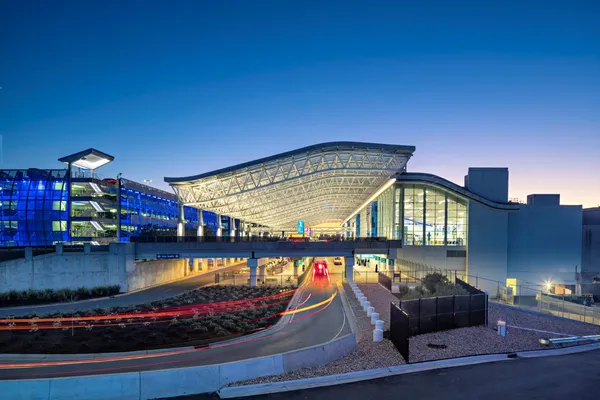
Simultaneously, CATS transit planners finalized critical design modifications for the western segment of the proposed LYNX Silver Line light rail. To circumvent complex subterranean tunneling beneath active runways and save an estimated $1 billion in capital construction costs, transit leaders approved an innovative intermodal connection at Charlotte Douglas International Airport (CLT).
Under the adopted plan, the light rail line will terminate at a modern multi-modal station on Wilkinson Boulevard, approximately one mile from the passenger terminal. Arriving travelers and airport employees will transfer to an automated, elevated Automated People Mover (APM) system, providing frequent, frictionless 3-minute transfers directly to the airline ticketing concourses.
Long-Term Mobility Funding Drives Mecklenburg Transit Renaissance
The regional capital program is underpinned by the 1 percent local sales tax, projected to generate more than $19.4 billion over 30 years under the stewardship of the Metropolitan Public Transportation Authority. Revenues are legally partitioned to fund rail transit (40 percent), arterial roadway and pedestrian safety modernization (40 percent), and countywide bus and microtransit expansion (20 percent).
Charlotte City Council members and regional mayors commended the pragmatic transit design, noting that fiscal responsibility combined with high-capacity rail connectivity solidifies the Queen City's standing as a premier economic engine of the Southeast.
📰 Related Stories
- Scout Motors Inaugurates $207 Million Charlotte Headquarters and Vehicle Innovation Center with Community Festival Charlotte • Sep 26, 2026
- Charlotte-Mecklenburg Board of Education Votes 5–4 to Terminate Superintendent Dr. Crystal Hill Charlotte • Sep 25, 2026
- Charlotte City Council and Regional Transportation Board Reaffirm Support for $3.7B I-77 South Express Lanes Charlotte • Sep 25, 2026
- Man Charged with Kidnapping and Murder of North Carolina Mail Carrier Hays • Jul 01, 2026