MBTA Advances Green Line Transformation with CAF USA Pilot Testing of 102 Type 10 Supercars to Enable 100% Low-Floor Boarding Across Boston
Transforming America's Oldest Subway Corridor
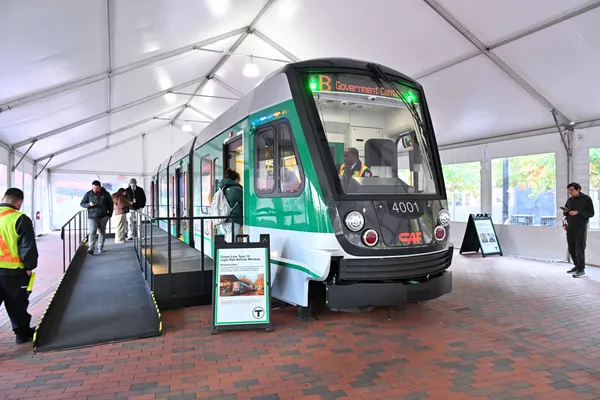
BOSTON, Massachusetts — The Massachusetts Bay Transportation Authority (MBTA) is accelerating its comprehensive Green Line Transformation (GLT) program, reaching major engineering milestones in the production and pre-delivery validation of its next-generation Type 10 light rail fleet. Fabricated by rail manufacturer CAF USA under an $810 million contract for 102 specialized articulated vehicles, the new 'supercars' represent the most significant technological leap for America's first subway route in over four decades.
Assembly and static diagnostic evaluations are currently wrapping up at CAF's Elmira, New York manufacturing plant, paving the way for pilot trainsets to arrive in Greater Boston for rigorous mainline track integration and dynamic testing along the B, C, D, and E branches.
114-Foot Supercars Expand Capacity and Universal Accessibility
At 114 feet long, each four-module Type 10 vehicle is roughly 50% longer than the legacy two-car train configurations it will replace, significantly expanding peak-hour passenger capacity across the central subway artery between Kenmore, Copley, Park Street, and Government Center. Engineered with a 100% low-floor profile, wider automated sliding doors, and unobstructed interior gangways, the Type 10 completely eliminates interior stair steps.
The universal floor height enables seamless, level boarding directly from street platforms for riders using wheelchairs, strollers, and wheeled mobility devices. In tandem with fleet production, MBTA track crews are actively executing station platform leveling and curb realignment projects along Commonwealth Avenue, Beacon Street, and Huntington Avenue to prepare wayside stops for the new vehicle dimensions.
Cutting-Edge Crash Safety and Digital Train Control Systems
Equipped with state-of-the-art crash energy management (CEM) structures, advanced computer-controlled traction motors, and regenerative braking systems, the Type 10 fleet reduces electrical power consumption while enhancing operational stability. Crucially, the trains incorporate the MBTA's newly deployed Green Line Train Protection System (GLTPS), an intelligent wayside-to-train communications network that actively monitors vehicle proximity, enforces civil speed limits, and prevents red-signal violations.
Inside the passenger cabins, riders will experience digital real-time journey mapping displays, high-efficiency zoned HVAC climate control systems, modern USB charging ports, and automated audio-visual stop announcements calibrated for optimal accessibility.
Retiring Legacy Fleets to Secure Boston’s Transit Future
MBTA leadership emphasized that introducing the Type 10 vehicles will enable the agency to gradually retire aging Type 7 (Kinki Sharyo) and Type 8 (Breda) trolleys, some of which have operated through punishing New England winters since the 1980s. By consolidating the entire Green Line roster under a single standardized, modern rolling stock platform through 2031, transit officials anticipate dramatic reductions in depot maintenance backlogs and unscheduled service interruptions, establishing a resilient transit backbone for Boston commuters.
📰 Related Stories
- Mayor Wu Proposes Targeted Tax Abatements to Unlock 1,400 Boston Homes as Emergency Crews Manage Coastal Storm Boston • Sep 27, 2026
- Powerful Autumn Nor'easter Lashes Greater Boston with 60-MPH Winds and Significant Coastal Flooding Boston • Sep 26, 2026
- Four Indicted in Boston Over $12.2 Million U.S. Treasury Check Theft Ring as Nor'easter Batters Coast Boston • Sep 26, 2026
- Boston Cruise Ship Arrests: 11 Detained in Child Exploitation Material Investigation Boston • Aug 22, 2026