Powerful Autumn Nor'easter Lashes Greater Boston with 60-MPH Winds and Significant Coastal Flooding
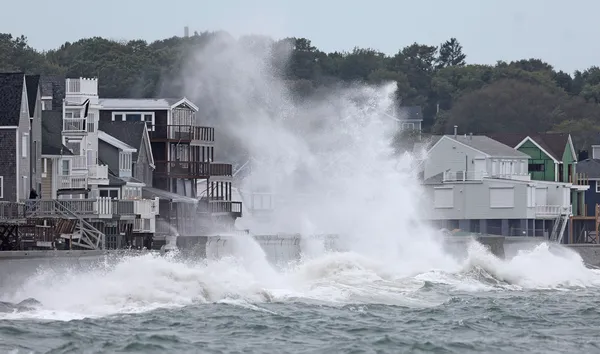
Coastal Surges and Gale-Force Winds Batter Massachusetts Shoreline
BOSTON, Massachusetts — A potent, early-autumn nor'easter battered Greater Boston and the Massachusetts coastline on Friday, September 25, and Saturday, September 26, 2026, delivering sustained tropical-storm-force winds, peak gusts topping 60 mph, torrential rains, and significant tidal storm surges. The intense ocean storm inundated low-lying roadways in East Boston, the Seaport District, and coastal communities across the North Shore and South Shore.
Utility crews from Eversource and National Grid worked around the clock to clear downed tree branches and restore electricity to thousands of impacted residential customers across Suffolk, Norfolk, and Essex counties. The National Weather Service maintained coastal flood warnings along Massachusetts Bay throughout consecutive astronomical high-tide cycles.
Municipal Emergency Mobilization and Transit Adjustments
Boston Mayor Michelle Wu and the Boston Office of Emergency Management urged residents to avoid non-essential travel and stay clear of floodwaters along vulnerable maritime corridors including Morrissey Boulevard and Atlantic Avenue. City public works crews deployed mobile industrial water pumps, sandbag barricades, and heavy catch-basin clearing teams to ensure arterial drainage remained functional.
The Massachusetts Bay Transportation Authority (MBTA) adjusted operations across regional networks, temporarily suspending ferry crossings between Long Wharf and the Boston Harbor Islands while deploying signal maintenance teams to monitor elevated subway lines. At Boston Logan International Airport (BOS), federal aviation controllers enacted ground-delay programs resulting in hundreds of flight delays and cancellations during the storm's peak.
Zoning for Clean Energy and Climate-Resilient Housing
The severe weather event underscored Boston's proactive climate resilience commitments, as the Boston City Council and municipal planning officials reviewed newly adopted Small Clean Energy Infrastructure zoning updates aligned with the Massachusetts State Climate Act. Mayor Wu also advanced targeted residential development tax abatements designed to spur 1,400 new climate-resilient affordable homes across downtown and adjacent transit neighborhoods.
Civic leaders commended municipal first responders, utility linemen, and transit personnel for ensuring public safety, affirming Boston's collective preparedness against extreme North Atlantic coastal weather.
📰 Related Stories
- Mayor Wu Proposes Targeted Tax Abatements to Unlock 1,400 Boston Homes as Emergency Crews Manage Coastal Storm Boston • Sep 27, 2026
- MBTA Advances Green Line Transformation with CAF USA Pilot Testing of 102 Type 10 Supercars to Enable 100% Low-Floor Boarding Across Boston Boston • Sep 26, 2026
- Four Indicted in Boston Over $12.2 Million U.S. Treasury Check Theft Ring as Nor'easter Batters Coast Boston • Sep 26, 2026
- MBTA Launches Automated Bus Lane Camera Enforcement Across Silver Line Corridors to Speed Up Boston Commutes Boston • Sep 25, 2026