MTA Expands Second Avenue Subway Contracts as Manhattan Congestion Relief Program Generates $15 Billion Capital Transit Pipeline
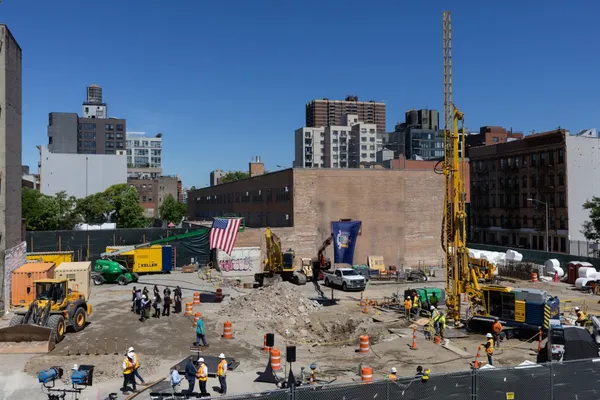
Second Avenue Subway Phase 2 Advances Heavy Civil Utility Relocations in East Harlem
NEW YORK CITY, New York — Bolstered by robust revenues from the Manhattan Congestion Relief Zone, the Metropolitan Transportation Authority (MTA) has accelerated procurement and early civil engineering works for Phase 2 of the Second Avenue Subway in East Harlem. Extending the Q Line northward from 96th Street to 125th Street along Second Avenue and westward along 125th Street to Park Avenue, the transformational project will build three new ADA-accessible underground stations at 106th Street, 116th Street, and 125th Street.
The future 125th Street terminal is engineered as an intermodal transit nexus, providing direct subterranean connections between the Q train, the Lexington Avenue subway line (4, 5, and 6 trains), and the Metro-North Railroad Harlem-125th Street station. Utility relocation teams and structural engineers are actively securing tunnel easements and subterranean rights-of-way to minimize surface disturbance along 125th Street's vital cultural and commercial thoroughfare.
Congestion Tolling Revenue Powers $15 Billion Transit Infrastructure Investments
The capital acceleration follows the operational milestone of Manhattan's Central Business District Tolling Program, which has reduced peak-hour traffic congestion south of 60th Street by more than 11 percent while boosting trans-borough crossing speeds. With over 1.3 billion annual subway trips recorded across New York City, net toll revenues are unlocking $15 billion in bonded capital funding dedicated to long-deferred transit renewal.
The MTA Capital Program is channeling these dedicated funds into modernizing computerized Communications-Based Train Control (CBTC) signaling on the Fulton Street and Sixth Avenue corridors, installing vertical accessibility elevators at 20 outer-borough subway stops, and rolling out new R211 open-gangway trainsets designed to shorten station dwell times and increase passenger throughput.
Synchronizing Transit Expansion with 'City of Yes' Housing Growth
Municipal transit leaders and the New York City Department of City Planning emphasized that the rapid transit extension directly complements the historic 'City of Yes for Housing Opportunity' zoning update. By legalizing denser, transit-oriented mixed-use housing developments near high-frequency subway corridors, the city anticipates adding upwards of 82,000 new homes over the coming decade.
In East Harlem, transit-oriented development masterplans are designated to prioritize affordable, rent-stabilized multi-family residences, ensuring long-time community residents benefit directly from modern zero-emission transit access and accompanying streetscape safety enhancements.
Long-Term Economic and Climate Resilience for Metropolitan New York
Civic transit coalitions and regional business associations praised the synchronized progress, pointing to transit reliability as the irreplaceable backbone of New York’s economic health. By reducing tailpipe emissions across Manhattan by over 20 percent and securing permanent funding for subway modernization, the MTA and New York City are establishing an equitable, low-carbon transportation blueprint for future generations.
📰 Related Stories
- Governor Hochul and MTA Award $19.7 Million Design Contract for Metro-North Hudson Line Climate Resiliency Along Bronx-Hudson Corridor New York City • Sep 26, 2026
- Governor Hochul Declares State of Emergency for NYC as Coastal Nor'easter Prompts MTA Bridge Restrictions and Flood Safeguards New York City • Sep 26, 2026
- NYC Council Unveils Sweeping AI Governance Legislation with Whistleblower Protections and Algorithmic Audits New York City • Sep 25, 2026
- Detroit Advances Housing for the Future Fund 2.0 as DDOT Deploys $30M Transit Reliability Upgrades Detroit • Sep 27, 2026