Phoenix City Council and Valley Metro Advance 10-Mile West Phoenix Light Rail Extension Corridor
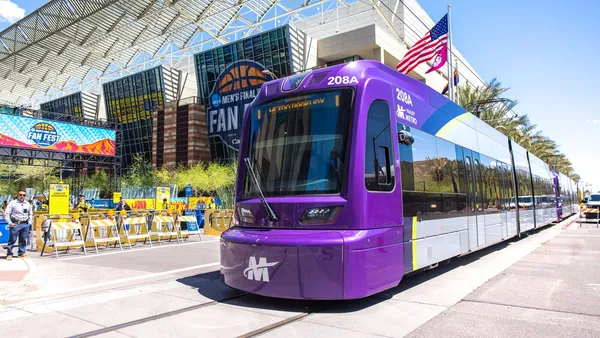
Expanding High-Capacity Mass Transit to West Phoenix Communities
PHOENIX, Arizona — The Phoenix City Council, in statutory coordination with regional transit agency Valley Metro, has advanced comprehensive engineering and environmental evaluation frameworks for the landmark West Phoenix Light Rail Extension. Following the municipal council's strategic vote to reprioritize regional transit corridors, Valley Metro project teams have focused dedicated design and public consultation initiatives along Indian School Road, creating a high-capacity electric transit artery connecting the central rail network directly to the Desert Sky Transit Center.
Spanning approximately 10 miles through one of the most densely populated, transit-dependent sectors of the Valley of the Sun, the proposed corridor is engineered to provide fast, reliable mobility for hundreds of thousands of residents. Commuting models project that dedicated-guideway light rail services will cut travel times across west Phoenix by up to 30 percent while linking Maryvale and West Phoenix neighborhoods directly to downtown corporate centers, university hubs, and regional healthcare institutions.
Integrating Critical Water and Stormwater Infrastructure Upgrades
In alignment with Phoenix's coordinated capital improvement policies, the light rail alignment serves as a catalyst for deep subterranean utility modernization. The City of Phoenix Water Services Department is collaborating with transit engineers to replace aging water mains, upgrade high-capacity storm drainage canals, and install cathodic corrosion-protection systems designed to safeguard municipal metallic pipe networks from stray electrical transit currents.
All upcoming station platforms along Indian School Road are being designed with desert-resilient architecture. Specifications include high-canopy shade structures incorporating solar photovoltaic arrays, water-efficient native xeriscaping, tactile accessibility paving, and dual-emergency communication totems directly linked to municipal public safety dispatch centers.
Capitalizing on South Central Two-Line Operational Network
The progress on the West Phoenix corridor builds directly upon the proven operational success of Valley Metro's recently inaugurated South Central Extension / Downtown Hub. That 5.5-mile system expansion established a versatile two-line operational model—the A Line and B Line—which has earned national civil engineering accolades for community connectivity, ridership growth, and environmental sustainability.
Mayor and civic leaders emphasized that modernizing west-side mobility forms an indispensable foundation for equitable regional prosperity. By pairing high-capacity zero-emission electric rail with pedestrian safety improvements, Phoenix is creating a cleaner, cooler, and more connected metropolitan future for generations to come.
📰 Related Stories
- Phoenix Police Headquarters Temporarily Closes Public Service Counters Following Major Water Pipe Rupture Phoenix • Sep 25, 2026
- Phoenix Fire Department Deploys New FEMA Urban Search and Rescue Canines to Strengthen Emergency Response Phoenix • Sep 25, 2026
- Phoenix Sky Harbor International Airport Selects American Airlines for Historic New West Terminal Expansion Phoenix • Sep 24, 2026
- San Francisco Launches Public Transparency Dashboard Tracking Safety and Cleanliness at Mission BART Plazas San Francisco • Sep 25, 2026