Austin Transit Partnership Advances Phase 1 Light Rail Route Following Federal Environmental Milestone
Advancing Central Texas’s First Modern Light Rail Network
AUSTIN, Texas — The Austin Transit Partnership (ATP), working in close collaboration with the City of Austin and the Capital Metropolitan Transportation Authority (CapMetro), has reached critical engineering and utility relocation milestones for Phase 1 of the multi-billion-dollar Project Connect Light Rail system. Following the formal issuance of the federal Record of Decision (ROD) under the National Environmental Policy Act (NEPA), agency project teams are actively progressing detailed civil engineering schematics and procurement frameworks ahead of anticipated heavy ground-breaking in 2027.
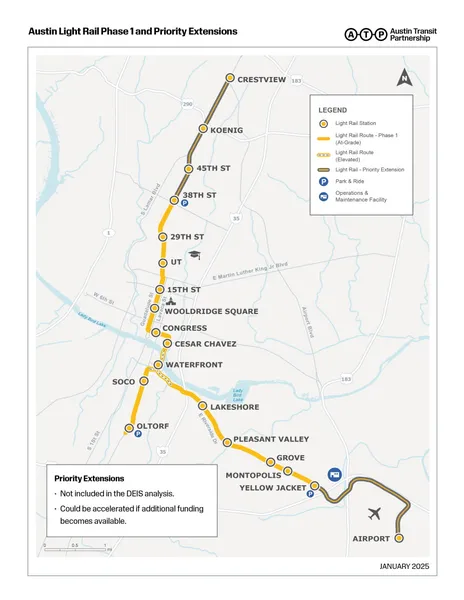
The initial 9.8-mile light rail alignment establishes an essential north-south and east-west transit spine through the heart of the Texas capital. Commencing at a northern multimodal terminal on 38th Street along Guadalupe Street, the alignment passes directly through the University of Texas at Austin main campus, traverses the bustling downtown commercial core and the Texas State Capitol complex, crosses Lady Bird Lake via a newly designed dedicated transit and active mobility bridge, and forks to serve East Riverside Drive toward Yellow Jacket Lane and south along South Congress Avenue.
High-Capacity Electric Traction and Intermodal Connectivity
Designed as a fully electrified, zero-emission mass transit system, the Austin Light Rail vehicles will feature modern low-floor boarding ramps, expansive panoramic windows, automated passenger information totems, and high-capacity multi-use spaces accommodating bicycles and mobility devices. Intermodal coordination with CapMetro’s growing fleet of zero-tailpipe-emission battery-electric buses and expanded CapMetro Rapid bus routes ensures seamless transfer opportunities across the greater metropolitan area.
To guarantee punctual, dependable headways through high-volume corridors, the system will operate along dedicated street-level rights-of-way fitted with intelligent Transit Signal Priority (TSP). The technology communicates directly with municipal traffic management centers to clear green lights for approaching trains, ensuring reliable travel times even during peak commuting windows along congested arterial corridors.
Equitable Transit-Oriented Development and Long-Term Mobility
Austin civic leaders and transit planners emphasized that the light rail investment serves as a cornerstone for sustainable urban development. Under the city's Equitable Transit-Oriented Development (ETOD) policy framework, station areas are being master-planned to encourage high-density mixed-use communities, pedestrian-friendly civic plazas, and deeply affordable residential housing options.
By providing a rapid, high-capacity alternative to chronic highway bottlenecks along Interstate 35 and MoPac Expressway, the completed light rail network will reduce hundreds of thousands of daily single-occupancy vehicle trips, supporting Austin’s Climate Equity Plan and transforming regional mobility for generations to come.
📰 Related Stories
- TxDOT and Mobility Authority Officially Open $677 Million Oak Hill Parkway in Southwest Austin Austin • Sep 25, 2026
- Austin City Council Authorizes $131 Million in Tax-Exempt Bonds for Mobility and Technology Upgrades Austin • Sep 25, 2026
- Austin City Council Approves Landmark Affordable Housing Mandate Near Future Light-Rail Corridors Austin • Sep 24, 2026
- Austin’s Alex Jones Still Faces Over $1 Billion in Sandy Hook Damages After Texas Ruling Austin • Aug 22, 2026