Gibbon Conservation Center in Santa Clarita Marks 50 Years of Primate Care
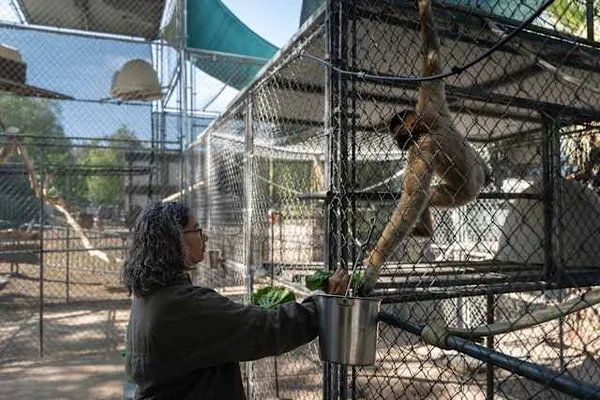
Endangered gibbons sing daily at a sanctuary north of Los Angeles
SANTA CLARITA, California — The Gibbon Conservation Center, a sanctuary in the dry hills of the Santa Clarita Valley, is marking five decades of care for one of the world’s rarest and most endangered groups of primates. The center, north of Los Angeles, now houses about 40 gibbons representing five species, whose powerful calls carry across the sparsely populated landscape.
Several times a day, the small apes produce choruses that can range from low grunts and hoots to piercing sounds likened to sirens and birds. Each session generally lasts 20 to 30 minutes, and the singing can be heard as far as a mile away, according to the center’s director, Gabi Skollar.
The sanctuary was established after the late Alan Mootnick obtained his first gibbon, Spanky, in 1976 from someone advertising the animal as a pet. Mootnick, a self-taught primatologist who also operated a painting and remodeling business, developed into a widely consulted authority on gibbon identification, care and vocalizations. Researchers from around the world sought his expertise, Skollar said, sometimes sending photographs or recordings to help identify rescued animals.
Skollar moved from Hungary to the United States in 2005 to work with Mootnick. After he died in 2011 from complications following heart surgery, she continued operating the center and its conservation mission. She now lives at the property with another caretaker and begins her days with the gibbons’ sunrise calls.
Gibbons face major pressure in their native tropical forest habitats across Southeast Asia. Deforestation has reduced and fragmented their range, while the wildlife trade continues to put young animals at risk after they are taken from their parents and sold as pets. Some species cared for at the Santa Clarita center have fewer than 2,000 individuals remaining in the wild, underscoring the importance of managed breeding and long-term sanctuary care.
The center was the first institution to successfully breed Javan gibbons, an endangered species found only on Indonesia’s Java island. It is also preparing to send a pair of northern white-cheeked gibbons to the Pittsburgh Zoo & Aquarium as part of broader efforts to maintain genetically diverse populations in human care.
Staff members feed the gibbons five or six times daily, offering washed lettuce, steamed sweet potatoes, bananas and other produce in a schedule designed to resemble the animals’ natural foraging patterns. Caretaker Jodi Kleier, who began as a volunteer and has worked at the center for a decade, hand-raised Rocky after the young gibbon was abandoned by his mother shortly after birth.
Beyond daily care, the sanctuary works with schools, tourists, senior groups and animal-care students, including participants from The Teaching Zoo at Moorpark College. Guided public tours are offered on weekends, while students gain practical experience in primate husbandry and conservation education.
Skollar, who is studying gibbon vocalizations through a doctoral program at the University of California, Los Angeles, said research in captive settings can assist field conservationists and rescuers. Her long-term plans include raising funds for larger enclosures and an education center. The Gibbon Conservation Center remains open for guided weekend visits as staff continue caring for its endangered residents and pursuing those expansion goals.
📰 Related Stories
- Mayor Todd Gloria and City Council Champion Neighborhood Homes Reform and Prioritize Critical Stormwater Upgrades San Diego • Oct 24, 2026
- Mayor Karen Bass Mandates DWP Utility Shutoff Moratorium as City Council Enacts Permanent ED 1 Affordable Housing Law Los Angeles • Oct 24, 2026
- Mayor Daniel Lurie and Supervisors Accelerate Downtown Office Conversions and Street Cleanliness Operations San Francisco • Oct 24, 2026
- Mayor Kate Gallego Celebrates Decade of T2050 Transit Success as Phoenix Expands Light Rail and Water Banking Phoenix • Oct 24, 2026