Pietro Mautino’s Drug Case Raises Questions About Political Connections in Illinois
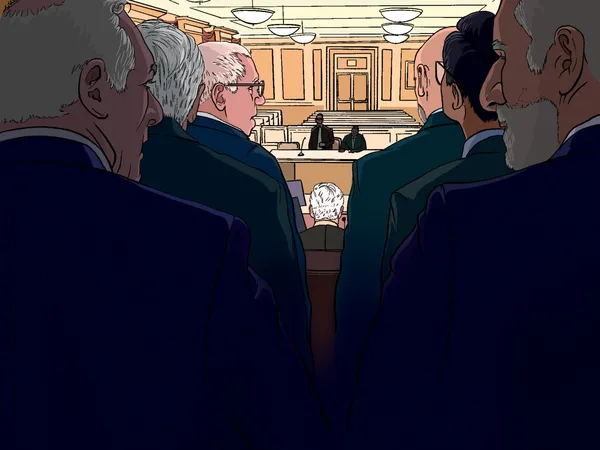
Pietro Mautino’s Drug Charges and Political Underpinnings
In a case that has unearthed troubling connections between politics and the legal system in Illinois, 18-year-old Pietro Mautino was arrested on drug-related charges in the early hours of a September night in 2014. His bronzed Kia sedan, travelling without headlights about 100 miles southwest of Chicago, was stopped by police at approximately 1:35 a.m., and officers detected a strong smell of cannabis emanating from the vehicle.
Officers noted Mautino tossing a plastic pill bottle into the back seat, prompting a search that uncovered multiple controlled substances within both the car and a black Prada bag belonging to Mautino. The haul included a hydrocodone pill, 14 clonazepam pills, marijuana, hash oil, and drug paraphernalia, leading to charges of unlawful possession of a controlled substance—a Class 4 felony.
Special Prosecution Unit Takes Over
Given the political ties of Mautino’s father, longtime state Representative Frank Mautino, the case was handed over to Illinois' Special Prosecution Unit to avert potential conflicts of interest among local prosecutors. However, this decision brings its own complications, as the unit's leadership also has political affiliations that raise questions about bias and impartiality in their proceedings.
Before his son’s arrest, Frank Mautino was a recipient of campaign contributions from the Illinois State’s Attorney’s Association PAC, which shares leadership with the Special Prosecution Unit. Following the trial delays—three years in total—a special prosecutor eventually offered Pietro Mautino a plea deal, allowing him to avoid prison in exchange for 24 months of special probation.
Revolving Doors and Political Influence
The relationship between local prosecutors and the Special Prosecution Unit produces an intricate web of political entanglements. For example, the local prosecutor who fielded Mautino's case, Brian Towne, later joined the Special Prosecution Unit himself, illustrating a revolving door scenario. Meanwhile, documented campaign contributions highlight the financial ties between Towne and Frank Mautino, further complicating the narrative.
Oversight Challenges and Lack of Transparency
The Illinois State’s Attorneys Appellate Prosecutor, or ILSAAP, which oversees the Special Prosecution Unit, was born in 1977 to assist local prosecutors inundated with appeals. However, its mission statement has evolved, now focusing on maintaining convictions rather than fair legal processes. Compounding issues of oversight, ILSAAP operates under a veiled exemption from the Freedom of Information Act, following legislative maneuvers designed to limit public scrutiny.
This lack of transparency was highlighted during a 2013 court case, wherein the Illinois Appellate Court lambasted ILSAAP’s new judicial designation, reinforcing the notion that the agency operates outside the public's view. With no direct oversight from the Administrative Office of the Illinois Courts or the state Supreme Court, concerns about accountability persist.
No-Bid Contracts and Political Patronage
ILSAAP has built its $36 million annual budget partially through no-bid contracts awarded to political insiders, further solidifying the intertwining nature of Illinois politics and judicial processes. Notable recipients of these contracts include individuals connected to former Governor JB Pritzker and former Chicago city officials. Such systemic favoritism raises the question of whether justice truly prevails in cases involving influential families.
Path Forward: Public Trust and Accountability
The entwinement of politics with the legal system, as laid bare by Pietro Mautino's drug case, indicates a pressing need for reform in Illinois. Comparisons with other states, like Maryland, demonstrate potential pathways toward increasing community trust through stronger vetting processes for special prosecutors.
The ongoing implications of this high-profile case continue to prompt discussions on judicial reform, advocating for enhanced oversight and transparency to prevent future conflicts of interest. As of now, a watchful public awaits the outcomes of this enduring narrative, reflecting broader concerns about trust in governmental institutions.
📰 Related Stories
- 29 Chicago Aldermen Form Budget Accountability Coalition Over FY 2027 Deficit as West Garfield Park Missing-Middle Housing Advances Chicago • Sep 29, 2026
- Chicago City Council Weighs Dueling Rental Reform Ordinances as Mayor Johnson Advances West Garfield Park Infill Housing Chicago • Sep 28, 2026
- Chicago Transit Authority Transitions to Reconfigured Regional Board Under NITA Act as City Manages FY 2026 Fiscal Operations Chicago • Sep 26, 2026
- Northern Illinois Transit Authority Assumes Regional Transit Oversight as CTA Completes Phase 1 of $2.1 Billion Red-Purple Modernization Chicago • Sep 26, 2026