Restrictions on Short-Barrel Firearms Lifted in Texas After Federal Court Ruling
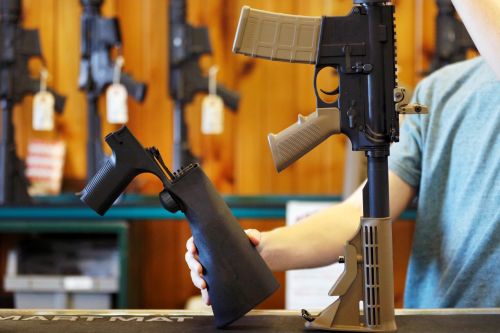
Historic Change in Gun Regulations Following Court Ruling
On Thursday, significant alterations to federal regulations on short-barrel firearms and silencers took effect in Texas and several other states after the Trump administration opted not to file an emergency appeal. This marked a pivotal moment for gun rights advocates who have championed loosening such restrictions.
The ruling stems from a U.S. District Court decision made by Judge James Wesley Hendrix in Lubbock, Texas, who concluded that the provisions of the National Firearms Act (NFA) were unconstitutional and unenforceable following the revocation of transfer and manufacturing taxes on those firearms. This development is seen as a landmark win for the Second Amendment by its proponents.
Initially enacted in 1934 after a series of high-profile shooting incidents, the NFA imposed a $200 tax on individuals seeking to transfer or manufacture specific firearms, with the aim of regulating these activities. However, following the passage of the One Big Beautiful Bill in July 2025, designed to repeal certain taxes, the legal groundwork for the NFA began to erode. Following the bill's signing, a coalition including Texas—and a total of 15 Republican-led states—moved to challenge its key components.
In his ruling, Judge Hendrix articulated that it was Congress’s prerogative, not the court's, to affirm or adjust the regulations imposed by previous laws. His decision effectively terminated the enforcement of NFA provisions related to short-barrel firearms and suppressors in the plaintiff states.
Following the ruling, the Department of Justice (DOJ) had a window of seven days to lodge an emergency appeal but chose not to do so, allowing the decision to become immediate. The DOJ has issued a statement promising to respect Second Amendment rights while evaluating its options in light of the ruling.
This decision has resonated strongly with members of the Republican Party, many of whom celebrated the outcome. U.S. Representative Chip Roy (R-Austin) took to social media to voice his approval of what he deemed a decisive victory for Second Amendment rights.
In line with the celebratory atmosphere among firearm advocates, local Texas politicians and activists conducted purchases of firearms and accessories shortly after the ruling took effect. State Representative Wes Virdell (R-Brady) reflected on the historic nature of the event in a post on X, mentioning, "Last night was an amazing experience to be a part of history in the making." Additionally, Brandon Herrera, a Republican candidate known for his advocacy in firearm rights, joined in the celebrations.
Conversely, this ruling has raised significant alarms among gun control activists, who are concerned about the ramifications of these changes. The president of the Brady Campaign, Kris Brown, criticized the DOJ's inaction, stating that the government is effectively compromising public safety and enabling the proliferation of potentially dangerous weapons.
As for the status of the ruling, while the DOJ retains the right to appeal within 60 days, the current silence leaves the future of firearm regulation in these jurisdictions uncertain.
📰 Related Stories
- Morgan Stanley Selects Downtown Dallas for $684 Million Regional Hub as $409M Bank of America Plaza Overhaul Advances Dallas • Sep 29, 2026
- San Antonio International Airport Lands Record $43 Million Federal Grant for Airfield and Terminal C Expansion San Antonio • Sep 29, 2026
- Houston City Council Approves $6 Million Loan for New Hope Housing Canal as $50M Regional Accord Finalized Houston • Sep 29, 2026
- San Diego MTS and Affirmed Housing Break Ground on $116M Spring View TOD as Airport Express Bus Expands San Diego • Sep 29, 2026