Texas School Accountability Ratings Highlight Racial Disparities in Education
A Struggle for Quality Education in Fort Bend ISD
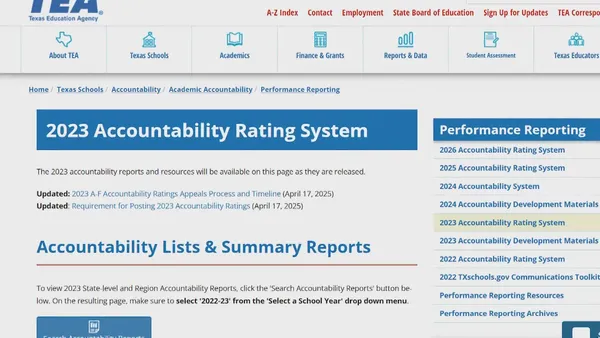
In a vivid reflection of Texas' educational landscape, families are grappling with the stark realities of school accountability ratings, which on August 14 revealed a disproportionately high failure rate among majority-Black schools. In Fort Bend Independent School District (ISD), parents like Mikole Montgomery face difficult decisions about their children's education. Montgomery chose to enroll her son, Jaleel, in the newly opened Amy Coleman Middle School instead of the local Missouri City Middle School, which has received an F rating from the Texas Education Agency (TEA).
Context of School Ratings
The TEA's recent accountability ratings spotlight systemic issues facing majority-Black schools across Texas. Approximately 20% of the roughly 300 majority-Black campuses received an A rating last year, while about 35% scored a D or an F, significantly higher compared to other racial demographics. The overall performance of majority-Black schools, where Black students make up more than 700,000 of Texas’ public school population, has raised concerns among parents and educators alike about the quality of education available to their children.
Resource Allocation and Community Impact
Montgomery's concern is rooted not only in academic performance but also in the broader community implications. As Texas grades schools based on attendance and performance metrics, families leaving to seek better opportunities could result in diminished funding for schools that remain, thereby exacerbating inequality. Black students are disproportionately affected, facing systemic barriers that hinder their educational achievements while being the most likely demographic to confront discipline issues and dropout rates.
“I certainly recognize the value in these kids,” Montgomery stated regarding the stigma surrounding Black schools. “Sending my son to the other side says something about how I feel about the kids as well — whether it’s intentional or not.”
Officials' Perspective and Ongoing Challenges
Texas Education Commissioner Mike Morath acknowledges the persistent academic gap, emphasizing the need for structural improvements. “The results are still unacceptable,” he noted, regarding the disparity in outcomes for Black children compared to their peers. Critics argue, however, that the A-F rating system perpetuates a cycle of inadequacy, placing undue pressure on schools to avoid penalties without necessarily enhancing the learning environment.
Community Voices and Solutions
Families like the Montgomerys are not alone in their frustration. Advocates such as Stephanie Brown, a long-time community volunteer, believe that schools need better access to rigorous academic programs and support from district leadership. Brown argues that resources need to be allocated equitably, pointing to disparities in course offerings that signal to Black students a narrowing of their aspirations. “We should not have to seek outside resources,” she said, highlighting the urgent need for reform at schools like Missouri City Middle.
Looking Ahead
Potential solutions involve re-engaging with local communities and addressing the historical and systemic issues that undermine educational growth. While TEA continues to evaluate school performance, the upcoming ratings next month will further shape the dialogue around equity in education within Texas. For Montgomery and other families, the pursuit of a quality education remains a critical, yet challenging endeavor. Currently, Missouri City Middle School remains near the bottom of the state’s ratings, prompting Montgomery to contemplate relocating out of Texas entirely for her son’s education. “I don’t think that these people have my son’s best interests,” she concluded.
📰 Related Stories
- El Paso Secures $8.7 Million Federal Aviation Grant for Airport Apron Modernization as $316 Million CIP and Tech District Advance El Paso • Sep 28, 2026
- Eli Lilly Breaks Ground on $6.5 Billion Pharmaceutical Manufacturing Campus at Generation Park in Houston Houston • Sep 28, 2026
- Fort Worth Adopts $3.33 Billion FY 2027 Budget for 1 Million Residents as Trinity Metro Expands DFW Airport Transit Connections Fort Worth • Sep 28, 2026
- Las Vegas RTC Advances Maryland Parkway 'Red Line' BRT Infrastructure as Gholson Landing Affordable Housing Debuts Las Vegas • Sep 28, 2026