NASA's Van Allen Probe A Plunges Back to Earth 14 Years After Launch, Ahead of Schedule
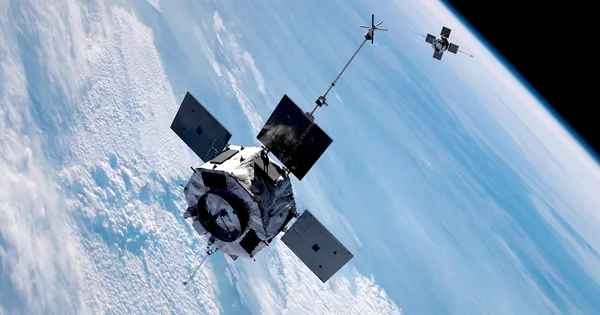
A 1,300-pound NASA spacecraft completed its uncontrolled return to Earth on Wednesday morning, nearly 14 years after it was first launched into orbit. The Van Allen Probe A, originally sent into space in August 2012, re-entered Earth's atmosphere at 6:37 a.m. Eastern Time over the eastern Pacific Ocean, as confirmed by the U.S. Space Force.
The re-entry occurred earlier than scientists had anticipated. Mission specialists had previously estimated the probe would not return until 2034, but an unusually active solar cycle accelerated the timeline by generating intense space weather events that increased atmospheric drag on the spacecraft, pulling it back toward Earth far sooner than projected. Officials had initially forecast the re-entry for Tuesday evening, with a 24-hour window of uncertainty.
While most of the spacecraft was expected to burn up during its descent through the atmosphere, some components were projected to survive re-entry. NASA assessed the probability of anyone on Earth being harmed at approximately 1 in 4,200, characterizing the risk as low.
The Van Allen Probe A was part of a twin-spacecraft mission designed to study Earth's permanent radiation belts — rings of charged particles held in place by the planet's magnetic field that protect Earth from cosmic radiation, solar storms, and solar wind. Though the mission was originally planned to last two years, both probes remained operational for nearly seven before running out of fuel in 2019.
During their operational lifespan, the probes made significant scientific contributions, including capturing the first observational evidence of a temporary third radiation belt that forms during periods of intense solar activity. Their findings have informed hundreds of scientific publications. The companion spacecraft, Van Allen Probe B, is not expected to re-enter Earth's atmosphere until sometime in the 2030s.
📰 Related Stories
- Artemis II Astronauts Break Free of Earth Orbit, Begin Journey Toward Moon Cape Canaveral • Apr 03, 2026
- California Boy’s Plush Toy Joins Artemis II Crew as Zero Gravity Indicator Cape Canaveral • Apr 02, 2026
- Jacksonville Council Passes $2 Billion Budget Restoring $4.9M Housing Trust Fund as JTA Restructures Transit Debt Jacksonville • Sep 30, 2026
- San Antonio Enacts $4.4 Billion FY 2027 Budget Expanding Housing to $37.7 Million as VIA Green Line Rapid Transit Progresses San Antonio • Sep 30, 2026