Fetterman Rejects SAVE America Act, Calls Out GOP's Reversal on Mail-In Voting
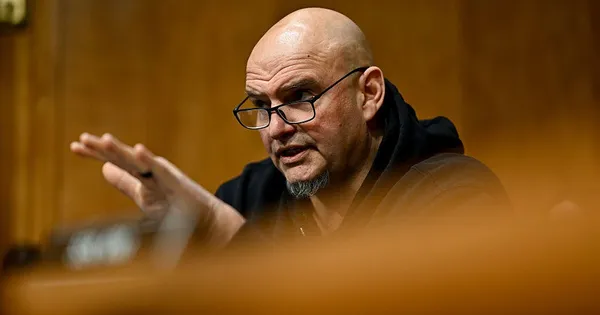
Democratic Senator John Fetterman of Pennsylvania has come out against the SAVE America Act, a federal elections bill backed by the Trump administration and a number of Republican lawmakers, arguing the legislation reflects a striking reversal by the GOP on mail-in voting.
Speaking in an interview Wednesday, Fetterman said he does not support the bill "in its current state." The legislation would mandate proof of citizenship to participate in federal elections and require photo identification to cast a ballot. President Trump has additionally pushed for an amendment that would effectively ban mail-in voting nationwide.
Fetterman pushed back sharply on that position, calling the criticism of mail-in voting "ridiculous" and pointing to Republican-leaning states like Ohio and Florida as examples of the practice working safely and effectively. He drew particular attention to Pennsylvania's Act 77, a 2019 law that legalized mail-in voting in the state with unanimous Republican support in the legislature. Fetterman, who was serving as Pennsylvania's lieutenant governor at the time, said the GOP championed the measure — only to reverse course after President Trump publicly condemned mail-in voting. A subsequent Republican-led legal challenge to overturn Act 77 failed when the Pennsylvania Supreme Court upheld the law in 2022.
On the bill's legislative prospects, Fetterman expressed confidence it would not advance, citing the Senate filibuster rule that requires 60 votes to move legislation to a floor vote. Senate Majority Leader John Thune also signaled this week that the bill currently lacks sufficient support in the chamber.
Despite his opposition, Fetterman acknowledged broad public backing for some form of voter identification, referencing a Pew Research Center survey from August 2025 showing 83% of Americans support requiring government-issued photo ID to vote. He indicated he could support a simpler, basic state ID requirement, stopping short of the bill's broader provisions.
📰 Related Stories
- Mayor Bowser Unveils Multi-Ward Housing Package Delivering 1,200 Units as D.C. Weighs Housing Investment Protection Act Washington • Oct 13, 2026
- Mayor Bowser Inaugurates $73M DC Infrastructure Academy at Spingarn as District Advances RFK Transit Master Plan Washington • Oct 06, 2026
- Mayor Bowser Transmits 180-Acre RFK Master Plan to D.C. Council as WMATA Plans Stadium-Armory Overhaul Washington • Oct 05, 2026
- San Antonio City Council Approves 23.7% SAWS Water Rate Plan as Autumn Weather Boosts River Walk Dining San Antonio • Oct 13, 2026