House Schedules Vote on Resolution Limiting Trump Iran Military Action
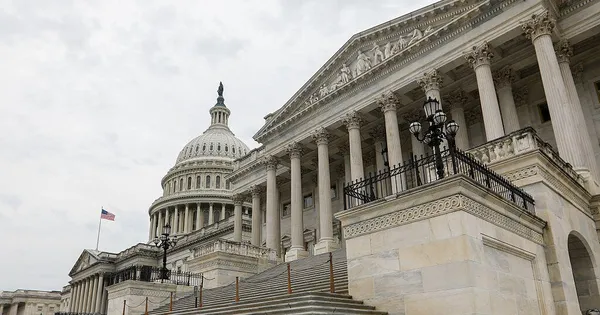
House to Vote on Iran War Powers Resolution Thursday
The House of Representatives is set to vote Thursday in Washington on a measure intended to block President Donald Trump from taking further military action against Iran without congressional support. The upcoming House vote follows a similar effort in the Senate that fell short a day earlier.
Resolution Seeks to Remove U.S. Forces from Unauthorized Hostilities
The resolution directs the president "to remove United States Armed Forces from unauthorized hostilities in the Islamic Republic of Iran." Lawmakers backing the measure aim to prevent additional military action against Iran without authorization under the 1973 War Powers Resolution, which Congress passed in response to the Vietnam War to check presidential authority to enter armed conflict without legislative consent.
Thomas Massie Introduced War Powers Measure Before Iran Bombing
Republican Representative Thomas Massie of Kentucky introduced the war powers resolution days before the United States bombed three of Iran's nuclear facilities last June. Massie subsequently backed away from forcing a vote last year after a ceasefire was reached. During floor debate, Massie stated that Congress is not meeting to declare war and argued that Congress has a constitutional duty related to decisions on sending U.S. forces into combat.
Johnson and Jeffries Outline Competing Positions
House Speaker Mike Johnson, a Republican from Louisiana, opposes the resolution. At a Wednesday news conference, Johnson said the vote "plays right into the hands of the enemy" and argued that the Iran operation has been "necessary, lawful and effective," and that reversing it would weaken the United States. Johnson stated that Congress has a constitutional right to exercise oversight but also has a duty not to undercut national security. He said he believes the House has the votes to defeat the resolution and described the U.S. action as a limited military operation, asserting that the United States is "not at war." Johnson warned that the resolution could impose "serious harm" and "jeopardize the lives of our troops and all those who are involved."
House Minority Leader Hakeem Jeffries, a Democrat from New York, predicted on Wednesday that there would be very strong Democratic support for the war powers resolution across the ideological spectrum. Jeffries said there is nothing ambiguous about Congress' constitutional authority to declare war. He characterized the president's war as unauthorized and unconstitutional and stated that the Constitution requires the president to obtain congressional approval before launching a war, which he said has not occurred.
Partisan Lines Shift as Individual Lawmakers Declare Positions
The vote is described as likely to scramble traditional partisan lines. At least one other Republican has said he would break with President Trump, while several Democrats have indicated they could vote against the resolution.
Republican Representative Warren Davidson of Ohio announced his support for the resolution on the House floor on Wednesday. Davidson stated that he views the moral hazard posed by a government no longer constrained by the Constitution as a grave threat.
Republican Representative Don Bacon of Nebraska, who supported a recent Venezuela war powers resolution, said he plans to support President Trump on this vote. Bacon noted that the current military operation could last for weeks or longer and said that members of Congress could revise their opinions over time.
Republican Representative Nancy Mace of South Carolina said she is open to changing her position in the future if the war lasts longer than estimated or if ground troops become involved. She said she would have greater concerns if the conflict extends beyond a few weeks or if ground forces are deployed.
Alternative Democratic Resolution Cites February 28 Attack
Democratic Representative Josh Gottheimer of New Jersey stated last month that he opposes the primary war powers resolution because he believes it would restrict flexibility needed to respond to evolving threats and risks. Gottheimer and a handful of other Democrats are supporting a separate resolution that directs the president to remove U.S. armed forces from hostilities with Iran within 30 days of the February 28 attack without congressional approval.
War Powers Framework and Congressional Authority
The Constitution grants Congress the power to declare war. The 1973 War Powers Resolution requires the president to consult with Congress in "every possible instance" before introducing U.S. military forces and to report to Congress within 48 hours if forces are deployed without a declaration of war. It also limits any unauthorized military engagement to 60 days. Jeffries emphasized that congressional authority to declare war is clear under the Constitution.
📰 Related Stories
- Mayor Bowser Unveils Multi-Ward Housing Package Delivering 1,200 Units as D.C. Weighs Housing Investment Protection Act Washington • Oct 13, 2026
- Mayor Bowser Inaugurates $73M DC Infrastructure Academy at Spingarn as District Advances RFK Transit Master Plan Washington • Oct 06, 2026
- Mayor Bowser Transmits 180-Acre RFK Master Plan to D.C. Council as WMATA Plans Stadium-Armory Overhaul Washington • Oct 05, 2026
- San Diego Finalizes Landmark Midway Rising Agreement for 4,250 Homes as Swift-Water Teams Complete Cyclone Rescues San Diego • Oct 13, 2026