Supreme Court Rules Trump’s Emergency Tariffs Violated Federal Law
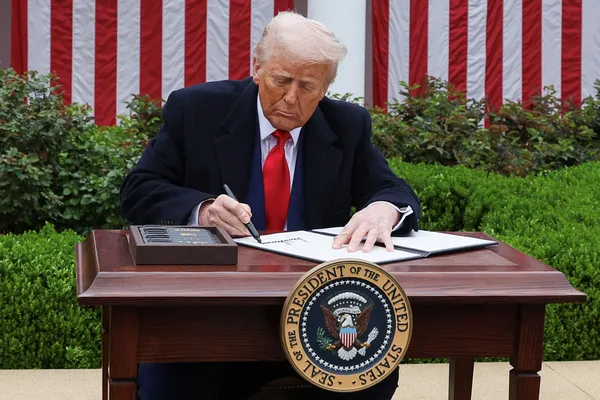
Supreme Court Issues 6-3 Ruling on Trump Tariffs
The Supreme Court ruled on Friday that President Donald Trump violated federal law when he unilaterally imposed sweeping tariffs across the globe. The decision concluded that the tariffs exceeded the authority granted by the International Emergency Economic Powers Act (IEEPA). The Court’s ruling represented a 6-3 majority against the administration’s position.
Chief Justice John Roberts wrote the majority opinion, which held that IEEPA does not authorize the president to impose tariffs. Justices Amy Coney Barrett and Neil Gorsuch joined Roberts and the three liberal justices in the majority. Justices Clarence Thomas, Samuel Alito and Brett Kavanaugh dissented.
Legal Basis and Scope of the Decision
In the opinion, Roberts stated that the president had asserted the power to impose tariffs of unlimited amount, duration and scope, and that such authority would require clear congressional authorization. He wrote that when Congress grants tariff powers, it does so clearly and with careful constraints, and that it did not do so in this instance.
The Court determined that the emergency authority President Trump attempted to rely on under IEEPA “falls short” of authorizing the tariffs at issue. The justices did not decide what should happen to more than $130 billion collected under the challenged tariffs, leaving that question unresolved in the ruling.
Tariff Revenues and Pending Refund Questions
As of December 14, the federal government had collected $134 billion in revenue from the tariffs being challenged, from more than 301,000 different importers, according to data from United States Customs and Border Protection and a filing to the US Court of International Trade. The Supreme Court’s majority opinion did not specify how, or whether, these funds should be returned.
Justice Brett Kavanaugh, in dissent, noted that the Court said nothing about whether, and if so how, the government should return the billions of dollars collected from importers. He wrote that any process to address refunds was likely to be a “mess.” The Supreme Court indicated that the question of what to do with the collected tariff revenue will likely need to be addressed by lower courts.
Challenges by Businesses and Lower Court Rulings
A group of small businesses challenged the tariffs, arguing that President Trump’s position amounted to a broad claim of power to levy a tax without congressional oversight. Every lower court that reviewed Trump’s emergency tariffs found that they violated federal law, though the courts relied on different legal grounds.
In one case led by New York-based wine importer V.O.S. Selections, the US Court of International Trade ruled that IEEPA did not authorize the emergency duties. An appeals court later affirmed that decision. In another case, Illinois-based educational toy company Learning Resources sued in federal district court in Washington, which also ruled against Trump. That case proceeded directly to the Supreme Court, bypassing the DC Circuit.
Both courts temporarily put their rulings on hold, allowing the administration to continue collecting tariffs while appeals were pending. In a related proceeding, importers including Costco sought a preliminary injunction to prevent Customs and Border Protection from finalizing tariff payments, arguing that unliquidated entries were necessary for potential refunds. Their request for a preliminary injunction was denied. The court cited the administration’s promise to refund IEEPA tariff payments if required, even for liquidated entries, while noting the administration’s statement that such a refund process would likely be laborious.
Reactions and Separate Opinions
President Trump called the ruling “a disgrace” while hosting a White House breakfast with governors, according to two people familiar with his comments. The president and Justice Department officials had previously characterized the dispute as crucial for the country, asserting to the justices that tariffs were central to the nation’s economic strength.
Justice Elena Kagan wrote a concurring opinion, joined by the two other liberal justices. She stated that ordinary principles of statutory interpretation were sufficient to resolve the case and that the relevant law’s reference to “regulate” importation did not naturally include the power to levy taxes. Kagan wrote that “straight-up statutory construction” resolved the case for her, without the need to apply a “major questions” clear-statement rule.
📰 Related Stories
- Mayor Bowser Unveils Multi-Ward Housing Package Delivering 1,200 Units as D.C. Weighs Housing Investment Protection Act Washington • Oct 13, 2026
- Mayor Bowser Inaugurates $73M DC Infrastructure Academy at Spingarn as District Advances RFK Transit Master Plan Washington • Oct 06, 2026
- Mayor Bowser Transmits 180-Acre RFK Master Plan to D.C. Council as WMATA Plans Stadium-Armory Overhaul Washington • Oct 05, 2026
- Jacksonville Advances Landmark Free to Garden Act as Shore Manufacturing Secures $65K Westside Expansion Grant Jacksonville • Oct 13, 2026