Chicago Woman Shot by Border Patrol Agent Testifies Before Congress and Seeks Release of Evidence
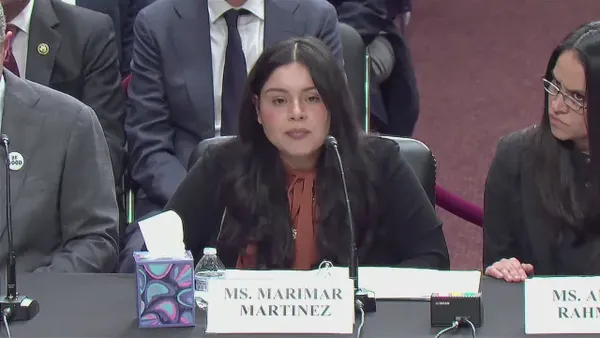
Chicago Shooting Victim Testifies on Capitol Hill
Marimar Martinez, a Chicago woman who was shot by a U.S. Customs and Border Protection agent in Chicago, testified before Congress on Tuesday at a federal forum on federal immigration agents' use of force. Her testimony took place on Capitol Hill and focused on her experience in the shooting and its aftermath.
Martinez was shot on October 4, 2025, in the Brighton Park neighborhood of Chicago. She stated that she was shot multiple times during an immigration protest near Pershing Road and Kedzie Avenue. She testified that she looked down and saw blood coming from her arms and legs and realized she had been shot multiple times. She said that what happened to her in a matter of seconds on October 4, 2025, will remain with her for a lifetime.
Details of the Criminal Case and Its Dismissal
Following the shooting in Brighton Park, federal agents claimed that Martinez chased them during the immigration protest. Federal prosecutors filed assault charges against her. Those assault charges were later dropped, and a judge dismissed them with prejudice. The dismissal with prejudice prevents the government from refiling the same charges against her.
Martinez's case drew further attention as the federal government’s account of the incident changed over time. Despite the dismissal of the criminal charges, a Department of Homeland Security press release and various government social media posts describing Martinez as a "domestic terrorist" who rammed federal agents with her vehicle remained online after the charges were dropped.
Legal Efforts to Release Video and Other Evidence
On the same day Martinez testified on Capitol Hill, her legal team obtained a legal victory in federal court in Chicago. Her attorneys had asked a federal judge to authorize the release of body camera footage and other evidence related to her shooting. They cited the recent shooting deaths of individuals identified as Good and Pretti in support of their request. Martinez has stated that she hopes the release of the videos will help improve federal law enforcement use of force policies.
Overnight, the federal government dropped its opposition to releasing the video evidence. In a court filing, the government stated that it did not object to modifying the protective order for most of what Martinez’s counsel requested, provided that certain additional redactions are made. The administration also agreed to share interviews with agents involved in the Chicago shooting, FBI reports, and Martinez’s 911 call.
The federal government, however, requested that the faces of agents be blurred in any released body camera footage. It also opposed the release of text messages between the Border Patrol agent involved in the shooting and his family members.
Continuing Impact and Pending Court Decision
Martinez has stated that she continues to experience physical and mental scars from the shooting. She indicated that these injuries affect her daily life and will remain in the future. Her attorney, Christopher Parente, has argued in court filings that Martinez sought the release of evidence from her case to defend herself against what he described as continuing harm to her reputation.
Parente wrote that the ability to disclose the evidence is essential to counter the ongoing damage caused by government statements that remained publicly accessible after the charges were dropped. A federal judge has not yet ruled on Martinez's request to release the body camera footage and other materials. A hearing on that request has been scheduled for Friday in federal court in Chicago.
During Martinez’s testimony on Capitol Hill, the brothers of Renee Good sat alongside her. They attended on the same day and stated after their sister’s death that they had hoped it would lead to change, and they said that such change had not occurred.
📰 Related Stories
- 29 Chicago Aldermen Form Budget Accountability Coalition Over FY 2027 Deficit as West Garfield Park Missing-Middle Housing Advances Chicago • Sep 29, 2026
- Chicago City Council Weighs Dueling Rental Reform Ordinances as Mayor Johnson Advances West Garfield Park Infill Housing Chicago • Sep 28, 2026
- Chicago Transit Authority Transitions to Reconfigured Regional Board Under NITA Act as City Manages FY 2026 Fiscal Operations Chicago • Sep 26, 2026
- Chicago City Council Deliberates One-Year Data Center Moratorium as West Loop Approves 26-Story Residential Tower Chicago • Sep 26, 2026